
- Home
- Archive: August, 2023
My Summer Car How to Get New Tires
It’s finally summertime and your car needs new tires. You don’t want to spend a lot of money, but you also don’t want to get stuck with cheap tires that will fall apart after a few months. Here are a few tips on how to get new tires without breaking the bank.
If your car is anything like mine, the tires are one of the first things to go. They get worn down from all the driving and can start to look pretty ragged. But don’t worry, there are plenty of ways to get new tires for your summer car.
One option is to simply buy new tires. This can be done at most auto parts stores or even some grocery stores. Just make sure you get the right size and type of tire for your car.
Another option is to find a tire recycling center. These centers take old tires and recycle them into new ones. It’s a great way to help the environment and save money on new tires at the same time.
Finally, you could always try fixing up your old tires. If they’re just slightly worn, you may be able to patch them up and get a few more miles out of them. Or if they’re really in bad shape, you could always use them as planters or something similar around your house.
So there you have it, three ways to get new tires for your summer car. No matter which option you choose, just make sure you stay safe on the road this summer!
My Summer Car Tire Types
There are a few different types of tires that you can buy for your car, and each has its own advantages and disadvantages. Here is a quick rundown of the most popular types of tires so that you can make an informed decision about which ones are right for your car.All-Season Tires: All-season tires are designed to provide good traction in a variety of conditions, including both dry and wet weather.
They typically have deeper treads than other types of tires, which helps them last longer. However, all-season tires may not provide the best possible traction in very cold or very hot weather.Summer Tires: Summer tires are designed specifically for use in warm weather.
They have shallower treads than all-season tires, which improves their grip on dry roads. However, they may not provide as much traction in wet weather or on icy roads.Winter Tires: Winter tires are designed specifically for use in cold weather.
They have deep treads that help them grip snowy and icy roads. However, they may not provide as much traction on dry roads or in warm weather.
Where Can I Get Free Wheels for My Summer Car?
If you’re looking for free wheels for your summer car, there are a few places you can check. Your local salvage yard or junkyard is a good place to start. You may be able to find some wheels that are in good condition that you can use for your car.
Another place to check is Craigslist or other online classifieds websites. People sometimes give away or sell things like wheels for very cheap on these websites. Finally, you could also try asking family and friends if they know of anyone who has some extra wheels that they would be willing to give or sell to you.
How Long Does It Take for Fleetari to Change Tires?
It usually takes around 30 minutes for Fleetari to change a tire.
How Do I Order Parts for My Summer Car?
Assuming you would like tips on how to order parts for your summer car:It is important to know the make, model and year of your vehicle when ordering parts. This information can usually be found on your registration or insurance card.
You will also need the specific part number, which can be obtained from your car’s owner’s manual or an online database such as CarParts.com.If you are planning on doing the work yourself, it is a good idea to call around to different auto parts stores and compare prices. Many stores offer discounts for do-it-yourselfers.
Once you have located the desired part, you can either order it online or over the phone and have it delivered or pick it up in person at the store.If you are taking your car to a mechanic, he or she will likely already have a preferred supplier for parts. However, it doesn’t hurt to ask if they would be willing to use a different store if it means saving you money.
How Do I Get to Loppe My Summer Car?
Assuming you would like tips on how to get to Lopi in your summer car:The best way to get to Lopi is by car. There are many ways to approach Lopi, but the most common and direct route is from Reykjavik.
From Reykjavik, take Route 1 (the Ring Road) east towards Mosfellsbaer. Shortly after passing through Mosfellsbaer, take Exit 3 for Route 36 towards Borgarnes. After about an hour on Route 36, you will reach the turnoff for Route 60, which leads directly into Lopi.
If you are coming from the north or south of Iceland, it is also possible to reach Lopi via Route 1. From Akureyri or Egilsstaðir, take Route 1 west until you reach the turnoff for Route 60 near Borgarfjörður eystri. This route will lead you directly into Lopi.
Once in Lopi, there are a few different options for accommodation and activities. Many people choose to stay at one of the campsites in the area, as there are several located within close proximity to hiking trails and other outdoor activities. Others may opt for one of the guesthouses or hotels in town.
Regardless of where you stay, be sure to explore all that Lopi has to offer!
Conclusion
In My Summer Car, the player is able to purchase new tires for their car. There are two ways to do this: either by driving to the store and purchasing them, or by winning them in a race. If the player chooses to drive to the store, they will need to purchase four tires.
The cost of each tire depends on the type of tire being purchased. There are three types of tires available: racing, winter, and all-season. Each type of tire has its own benefits and drawbacks.
For example, racing tires provide better grip but wear out quickly, while all-season tires last longer but don’t provide as much grip.The second way to get new tires is by winning them in a race. In order to win tires in a race, the player must first place first in the race.
The number of tires that can be won depends on the type of race being run. For example, if the player wins a local streetrace event, they will earn two new racing tires. However, if they win a national championship event, they will earn four new racing tyres.
How to Clean Car Tires Naturally
There are many ways to clean your car tires, but using natural products is always the best way to go. Here are a few tips on how to clean your car tires naturally: 1. Start by mixing together equal parts vinegar and water in a bucket.
2. Use an old rag or sponge to apply the mixture to your tires. 3. Let the mixture sit on your tires for a few minutes before scrubbing them with a brush or towel. 4. Rinse the tires with water and dry them with a clean towel or cloth.
5. You can also use baking soda and water to make a paste that will help remove any stubborn dirt or grime from your tires.
- Assuming you would like tips on how to clean your car’s tires:1
- Park your car in a shady spot so the tires don’t get too hot
- Mix equal parts water and white vinegar in a bucket
- Dip a brush or sponge into the mixture and scrub each tire thoroughly
- Rinse the tires with a hose or clean water from the bucket
- Dry the tires with a soft cloth or towel to prevent streaking
How Can I Make My Tyres Look New?
If you’re looking to make your tyres look new, there are a few things you can do. First, clean them with a mild soap and water solution. Then, use a tire shine product to make them look shiny and new.
Finally, apply a clear coat to protect the tyre from future damage.
What is the Best Way to Clean Auto Tires?
Assuming you would like tips on how to clean your car tires:One way to clean your car tires is by using a tire cleaner. This can be found at most auto stores.
You will want to spray the cleaner on the tire and then scrub with a brush. Once you have scrubbed the tire, rinse it off with water. Another way to clean your car tires is by using soap and water.
First, wet the tires down with water and then apply soap. Scrub the tires with a brush and then rinse them off.
What to Put on Tires to Make Them Shine?
If you’re looking to make your tires shine, there are a few things you can do. First, you’ll want to clean them with soapy water and a brush. This will remove any dirt or grime that’s built up on the surface.
Once they’re clean, you can apply a tire dressing. This is a liquid or gel that will give your tires a shiny, wet look. You can find tire dressings at most auto parts stores.
To apply the tire dressing, simply put some on a rag and wipe it onto the surface of the tire. Let it dry for a few minutes before driving off – otherwise, you might get Tire-Dressing-All-Over-Your-Wheel syndrome (TDAYOW). And nobody wants that!
Can You Use Dish Soap to Clean Car Tires?
If you’re looking for an easy and effective way to clean your car tires, dish soap may be a good option. Dish soap is designed to break down grease and grime, making it ideal for cleaning car tires. Plus, it’s usually gentle enough that it won’t damage the tire’s surface.
To use dish soap to clean your car tires, simply add a squirt or two of dish soap to a bucket of warm water and mix it together. Then, use a sponge or brush to scrub the solution onto the tire’s surface. Rinse the tires with clean water when you’re finished and dry them with a towel.
Cleaning Tires With Dawn
If you’re like most people, you probably don’t think about cleaning your tires very often. But if you take a close look, you’ll notice that they can get pretty dirty! Over time, road grime, brake dust, and other debris can build up on your tires and make them look dull and lifeless.
Luckily, there’s an easy way to clean them up and restore their shine: Dawn dish soap! Just squirt some Dawn onto a sponge or cloth and scrub the tires in a circular motion. You’ll be amazed at how much dirt and grime comes off.
Once you’re done scrubbing, rinse the tires with water and dry them with a clean towel. Your tires will look like new again!
Conclusion
Assuming you would like a summary of the blog post titled “How to Clean Car Tires Naturally”:The post begins by noting that car tires can get quite dirty, and that this dirt can be difficult to remove using conventional cleaning methods. The author then outlines a three-step process for cleaning car tires using natural ingredients.
First, the tires are sprayed with a mixture of water and vinegar. Next, a paste made of baking soda and water is applied to the tires. Finally, the tires are rinsed with clean water.
The author notes that this process is safe for both the environment and your car, and that it will leave your tires looking shiny and new.
How to Make Tires Look Black Again
If your tires are looking a little dull, you can easily make them look black again with a few simple steps. You will need to clean the tires first to remove any dirt or grime that has built up on them. Once they are clean, you can use a tire shine product to make them look like new again.
- Remove any dirt or debris from the tires using a brush or cloth
- Apply a thin layer of black tire polish to the tires, using a sponge or cloth
- Allow the tire polish to dry for 30 minutes, then buff it off with a clean cloth
What is the Best Homemade Tire Shine
Assuming you would like a blog post discussing the best homemade tire shine:There are many ways to get your car looking its best, and one of those ways is by having shiny tires. Unfortunately, buying tire shine can be expensive, and it’s not always easy to find the right product for your needs.
If you’re looking for an alternative to store-bought tire shine, you may want to try making your own.Homemade tire shine is simple to make, and it can be just as effective as any product you would buy at the store. The best part is that you likely already have all of the ingredients you need in your home.
All you need is some water, white vinegar, dish soap, and olive oil.To start, mix together equal parts water and white vinegar in a bowl or spray bottle. Then add a squirt of dish soap and a few drops of olive oil.
Once everything is mixed together well, apply it to your tires using a cloth or sponge. Rub it in until the entire surface of the tire is covered. Let it sit for a few minutes so that it can dry completely before driving off.
This homemade tire shine will leave your tires looking shiny and new without costing you a fortune.
How Do You Make Old Tires Look New?
If you’re looking to make your old tires look new, there are a few things you can do. First, start by giving them a good wash. Use a mild soap and water solution to clean off any dirt or grime that’s built up on the surface of the tires.
Next, use a tire shine product to give the tires a nice sheen. Apply it evenly and let it dry for best results. Finally, consider dressing up your tires with some decals or stickers.
This can give them a fresh, new look that will help them stand out from the rest of your vehicle.
What is the Best Thing to Put on Tires to Make Them Shine?
There are a few things that you can put on your tires to make them shine. You can use tire gel, tire spray, or even just some soap and water. Tire gel is probably the best option, as it will help to protect your tires from UV rays and keep them looking shiny.
Tire spray is also a good option, but it may not last as long as tire gel. Soap and water will work if you don’t have anything else, but it won’t last very long and your tires won’t be as protected from the elements.
How Do You Clean Faded Tires?
Cleaning faded tires is a simple process that can be done at home with common household cleaners. First, mix together a solution of one part dish soap to two parts water. Next, use a tire brush to scrub the cleaner into the tire surface.
Finally, rinse the tires with clean water and dry them with a clean cloth.
How Do You Fix a Discolored Tire?
Discoloration of tires is a common issue that many car owners face. There are several reasons why tires may become discolored, but the most common cause is exposure to the sun. UV rays can cause the rubber to break down and fade over time.
Other causes of tire discoloration include using the wrong type of cleaner or polish, using too much cleaner or polish, and not properly cleaning the tires before applying a protectant.If you have noticed that your tires are starting to look dull and discolored, there are some things you can do to fix it. First, make sure you are using the right type of cleaner or polish for your tires.
Second, be sure to follow the directions on how much cleaner or polish to use – using too much can actually cause more harm than good. Third, make sure you thoroughly clean your tires before applying any protectant. And finally, consider investing in a quality tire protectant specifically designed to resist UV damage and keep your tires looking new for longer.
Conclusion
If your tires are looking a little dull, you can easily make them look black again with a few simple steps. First, clean the tires with soap and water to remove any dirt or grime. Then, use a tire shine product to make the tires look shiny and new.
Finally, apply a coat of wax to the tires to protect them from future damage.
How to Pump Mountain Buggy Tires
If you’re taking your Mountain Buggy for a spin on some rougher terrain, you’re going to want to make sure your tires are properly inflated. Here’s a quick guide on how to pump up those tires so you can keep on rolling. You’ll need a good quality bike pump – one that can attach to both Presta and Schrader valves.
Make sure the valve is open before you start pumping. If it’s not, you could damage the valve or overinflate the tire. Once the pump is attached, start pumping away!
Check the pressure gauge periodically to see how much air is going in. For most mountain buggy tires, you’ll want around 35-40 PSI.
- Inflate the mountain buggy tires to the recommended PSI using a hand or floor pump
- Connect one end of the mountain buggy tire pump to the valve stem on the first tire
- Pump the handle of the mountain buggy tire pump up and down until the desired PSI is reached
- Repeat steps 2-3 for each remaining tire on the mountain buggy
How Do You Pump Up Stroller Tires?
If you have ever had a stroller with flat tires, you know how frustrating it can be. You may be wondering how to pump up stroller tires. Here is a step by step guide on how to do just that.
First, you will need to locate the valve stem on the tire. It is usually located on the side of the tire. Once you have found the valve stem, unscrew the cap and insert the pump nozzle.
Next, start pumping air into the tire until it reaches the desired pressure. Most strollers have a recommended PSI (pounds per square inch) that can be found on a sticker somewhere on the stroller frame. Once you have reached the correct PSI, screw the cap back onto the valve stem to prevent any air from escaping.
Now your stroller tires should be properly inflated and ready to use!
Can You Air Up Stroller Tires?
Stroller tires typically need to be inflated about once a week, and can be done with a standard bike pump. Inflating the front tires first will help keep the stroller balanced. When pumping up the tires, it’s important not to overinflate them, as this can cause the tire to burst.
How Do I Pump Up My Wheels?
Assuming you have a tire with an inner tube, you will need a bike pump. If your tires are the tubeless kind, you will need a syringe or something similar to inject air into the tire.To start, remove the cap from the valve stem on the tire.
If there is a knurled ring surrounding the valve stem, unscrew it until it is loose. Next, attach your bike pump to the valve stem. Some pumps will have a lever that needs to be flipped up in order for it to fit onto the valve properly.
Once the pump is attached, start pumping! It may take several minutes to get enough air into the tire so that it feels firm. Be careful not to overinflate the tire – you should only Pump up your wheels until they feel firm, but not rock hard.
You may find it helpful to measure Tire pressure using a gauge before and after pumping in order to ensure accuracy.If you are inflating a tubeless tire, start by removing any sealant that might be blocking The hole in The rim where The valve stem goes through. Next use your syringe (or similar tool) To inject air into The tire through The valve stem until The desired pressure is reached – again being careful not To overinflate.
How Do You Inflate a Bumbleride Tire?
Assuming you have a bumbleride stroller with air-filled tires:To inflate a bumbleride tire, you will need an air pump. You can use either a hand pump or an electric pump.
If using a hand pump, insert the nozzle of the pump into the valve stem on the tire and Pump the handle up and down until the tire is inflated to the desired level. If using an electric pump, plug the power cord into an outlet and turn on the switch. Then, hold the end of the hose over the valve stem on the tire and press down on the inflation trigger until the tire is inflated to your desired level.
How to Inflate Baby Trend Stroller Tires
Are you the proud owner of a Baby Trend stroller? If so, you may eventually need to know how to inflate the tires. Here’s what you need to do:
First, identify the type of valve on your stroller’s tires. There are two types of valves – Schrader and Presta. A Schrader valve is similar to the kind found on a car tire, while a Presta valve is thinner and has a screw-on cap.
If your stroller has Schrader valves, simply use a hand or foot pump with a built-in gauge (or separate gauge) to inflate the tires to the desired pressure. Most Baby Trend strollers recommend inflation to 35 psi.If your stroller has Presta valves, first unscrew the cap and then use a hand or foot pump without a gauge (or an air compressor set to low pressure) to slowly add air until the tire is firm.
Next, screw the cap back on tightly. Finally, use a separate gauge to check that the tire pressure is correct – it should be between 30 and 40 psi for most Baby Trend strollers.
Conclusion
If you have a mountain buggy stroller, you may be wondering how to pump up the tires. In this blog post, we will show you how to do just that. You will need a hand pump or an air compressor with the appropriate attachments.
We recommend using a foot pump if you have one available. If not, any type of hand pump will work just fine.To begin, remove the cap from the valve stem on each tire.
For Schrader valves, which have a small metal pin in the center of the valve stem, use the included adapter to fit over the valve stem before screwing on the hand pump or air compressor hose. If your mountain buggy has Presta valves (narrower and without a central pin), simply screw on the hand pump or air compressor hose directly to the valve stem.Next, start pumping air into each tire until it reaches the desired pressure level indicated on the side of each tire.
Once finished, re-attach each cap onto its corresponding valve stem and enjoy your newly inflated tires!
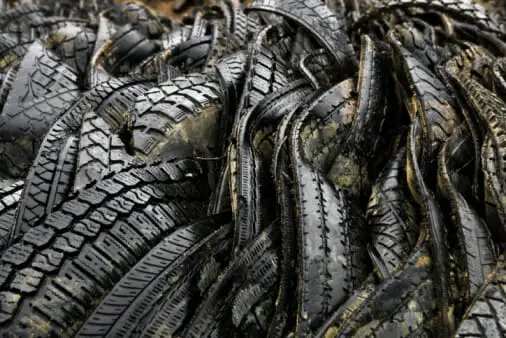
How to Cut Up Tires for Mulch
Tires are not only an eyesore, but they can also be harmful to the environment. But rather than throwing them away, you can recycle them by turning them into tire mulch. Tire mulch is a type of ground cover that is made from shredded tires.
It is often used in landscaping and gardening applications.To make tire mulch, you will need to cut up the tires into small pieces. This can be done with a saw or a knife.
Be sure to wear gloves and safety glasses when doing this. Once the tires are cut up, you can then use a chipper or shredder to further break them down into smaller pieces.
How to Cut Up Old Tires & Use for Mulch
- Acquire some used tires from a garage or tire shop
- Place the tire on a solid surface and use a sharp knife to cut around the circumference of the tire
- Carefully remove the top layer of the tire to reveal the inner tube
- Cut the inner tube into strips using the same method as before
- Finally, cut the strips of inner tube into small pieces for use as mulch in your garden beds!
Homemade Tire Shredder
A homemade tire shredder can save you money and space in your recycling operation. Here are the basics of how to make one.You will need:
-A heavy-duty grinder or chipper-A way to power the grinder (electricity or gas)-Tires to recycle
The first step is to find a suitable location for your shredder. It should be close to where the tires will be stored, as they will need to be moved before being shredded. It also needs to be large enough to accommodate the size of the grinder and have enough space around it for safety.
Once you have found a location, set up the grinder according to the manufacturer’s instructions.Next, you need to prepare the tires for shredding. Remove any dirt, debris, or objects that may be attached to them.
Once they are clean, cut them into smaller pieces if necessary so that they will fit into the grinder.
Now you are ready to start shredding! Turn on the grinder and feed in the tires slowly, making sure not to overload it.
The shredded tires can now be used in various ways, such as for landscaping projects or as fuel for incinerators. With a little bit of effort, you can easily turn waste tires into valuable resources!

Credit: tirerecyclingmachines.com
What is the Best Way to Cut Old Tires?
There are a few different ways that you can cut old tires. The best way to cut old tires really depends on what you plan to use them for. If you just need to get rid of the tire and don’t need it for anything specific, then the easiest way to cut it is with a saw or a knife.
Just make sure that whatever you’re using is sharp so that it doesn’t take forever.If you want to recycle the tire or use it for something specific, then you’ll need to be a little more careful with how you cut it. You’ll want to make sure that all of the pieces are even so that they can be used properly.
The best way to do this is with a power tool like a grinder or a sawzall. Just be careful not to overdo it and end up ruining the tire.
How Do I Turn My Tires into Rubber Mulch?
If you’re looking to give your garden a boost or add some extra protection to your flower beds, one great way to do so is by using rubber mulch. Rubber mulch is made from recycled tires and offers many benefits over traditional wood mulches. Here’s how you can turn your old tires into rubber mulch for your garden:
1. Start by finding some used tires. You can often find these for free at local garages or auto shops. Just make sure they’re clean and in good condition.
2. Once you have your tires, cut them into small pieces using a saw or power drill with a metal cutting blade attachment. The smaller the pieces, the easier they’ll be to work with later on.3. Next, spread out the tire pieces on a tarp or other large surface and spray them down with water from a hose.
This will help soften them up and make them more pliable for the next step.4 Use a rolling pin or another heavy object to roll over the tire pieces, flattening them out as much as possible. You want them to be as thin as possible so they’ll break down easily in the mulching process later on.
5 Now it’s time to start breaking down the tire pieces into even smaller bits that will eventually become rubber mulch. You can do this by hand with a hammer or other tool, or by running them through a chipper/shredder if you have one available. If using a chipper/shredder, start with the largest setting first and then move down to smaller settings until you get the desired consistency of rubber bits.
6 Once all of your tire pieces are nice and small, it’s time to mix in any additional materials you want to use in your mulch recipe (such as compost). Make sure everything is evenly mixed together before moving on to the next step. 7 Now it’s time to actually turn your mixture into rubber mulch!
To do this, simply spread it out onto a tarp in an even layer and then cover it with another tarp (this helps keep things tidy).
How Much Does a Tire Shredder Cost?
A tire shredder is a machine that helps with the recycling of old tires. The cost of a tire shredder depends on its size and features. A small tire shredder might cost around $30,000, while a large industrial one could cost over $100,000.
What Do I Need to Cut Tires?
Assuming you would like a blog post on the topic of “What do I need to cut tires?”, here are some tips:First, you will need a sharp knife. A utility knife or box cutter will work fine.
Second, you will need a straight edge to guide your cuts. A ruler or yardstick can be used for this purpose. Third, it is helpful to have a piece of cardboard or paper to place under the tire while you are cutting it.
This will help protect your work surface and keep the tire from slipping while you are cutting it.Now that you have gathered your materials, follow these steps to cut your tire:
1. Place the tire on top of the cardboard or paper on your work surface.
2. Using the sharp knife, make a series of small cuts around the circumference of the tire. Be sure to keep the cuts straight and even so that they will be easy to remove later.
3. Once all of the cuts have been made, carefully remove each section of tire from the rest of the tire.
Start by gently prying up one end of each section with the knife and then pulling it away from the rest of the tire.
4. You can now dispose of those old tires however you see fit!
Conclusion
If you’re looking to add a bit of extra mulch to your garden this year, consider using recycled tires. It’s easy to cut up tires for mulch, and it’s a great way to give old tires new life. Here’s how to do it:
1. Start by finding an old tire that you can recycle. Make sure it’s in good condition and not too worn down.2. Use a sharp knife or saw to cut the tire into thin strips.
You can make the strips as wide or narrow as you like, depending on how much mulch you need.3. Spread the tire strips around your garden beds, and water them well. The tire mulch will help keep weeds at bay and retain moisture in the soil.
4. Enjoy your eco-friendly, recycled tire mulch!
How to Clean Vogue Whitewall Tires
If you own a car with Vogue whitewall tires, you know how important it is to keep them looking clean and new. But over time, dirt, grime, and other build-up can make even the whitest of tires look dull and dingy. Fortunately, there are a few simple steps you can take to clean your Vogue whitewall tires and restore their original luster.
To start, you’ll need to gather a few supplies including water, soap, a sponge or brush, and some tire cleaner. You can find tire cleaner at most auto parts stores or online. Once you have everything you need, simply wet down your tires with some water and then apply the soap or tire cleaner.
Scrub the tires with your sponge or brush until they are completely clean before rinsing them off with more water.If your tires are still looking lackluster after washing them, you may need to use a whitewall cleaner specifically designed for removing tough stains from white walls. These cleaners usually come in a gel form that you apply directly to the stained areas of your tires before scrubbing again with your sponge or brush.
Be sure to follow the directions on the product label carefully so that you don’t damage your tires in the process.Once your Vogue whitewall tires are sparkling clean again, be sure to protect them from future dirt and grime by regularly applying a quality tire shine product designed for whitewalls.
- Begin by mixing two ounces of dish soap with two cups of warm water in a bucket
- Use a clean sponge or cloth to scrub the tires, being sure to get into all the nooks and crannies
- Rinse the tires with clean water from a hose or bucket
- Allow the tires to air dry completely before driving or replacing the wheels
Vogue Tire Cleaner
If you’re looking for an easy and effective way to clean your tires, then look no further than Vogue Tire Cleaner. This cleaner is designed specifically for tires, and it will quickly remove any dirt, grime, or grease that may be on your tires. Simply spray the cleaner onto your tires and let it sit for a few minutes before wiping it off with a clean cloth.
You’ll be amazed at how clean your tires will look after using this cleaner!
What is the Best Thing to Clean Vogue Tires With?
Assuming you would like tips on how to clean your Vogue tires:The best way to clean your Vogue tires (or any car tires for that matter) is to use a tire cleaner. You can find these at most auto stores or online.
Simply spray the cleaner on the tire and let it sit for a few minutes before wiping it off with a clean cloth.If you don’t have access to a tire cleaner, you can also use dish soap and water. Mix together 1 part dish soap with 10 parts water and scrub the tires with this mixture using a brush.
Once again, let the solution sit for several minutes before rinsing it off with water.
What is the Best Way to Clean Whitewall Tires?
Whitewall tires are a type of tire that has a white stripe running around the periphery of the tire. Whitewall tires are typically made of rubber and have a tread pattern that is designed to grip the road surface for traction. The white stripe on whitewall tires is achieved by adding a white pigment to the rubber compound during manufacturing.
The best way to clean whitewall tires is to use a cleaner that is specifically designed for whitewall tires. These cleaners will remove dirt, grime, and stains from the whitewall without damaging the tire or stripping away the white pigment. When using a whitewall tire cleaner, be sure to follow the instructions on the label and rinse the tires thoroughly after cleaning.
How Do I Make My White Walls White Again?
If you have white walls that have become discolored, there are a few ways to make them white again. First, you can try washing the walls with a mild soap and water solution. If this doesn’t work, you can try using a whitening agent specifically designed for walls.
There are also some home remedies that can be effective, such as using vinegar or lemon juice. If all else fails, you may need to repaint your walls to get them looking their best.
How Do I Keep My Whitewall Tires from Turning Yellow?
It’s no secret that whitewall tires can turn yellow over time. But there are a few things you can do to keep your tires looking their best for as long as possible.First, make sure to regularly clean your tires with soap and water.
This will help remove any dirt or grime that could potentially cause staining.Second, apply a tire dressing after you clean them. This will create a barrier between the tire and the elements, helping to prevent fading and staining.
Finally, be sure to park your car in a shady spot when possible. exposure to sunlight is one of the main culprits when it comes to whitewall tires turning yellow. By keeping your car out of direct sunlight, you can help slow down the process.
With these simple tips, you can help keep your whitewall tires looking like new for longer!
Conclusion
If you’re looking to clean your Vogue whitewall tires, here’s a step-by-step guide on how to do it. First, start by mixing up a solution of dish soap and water. Then, use a soft brush to scrub the tires with the soapy water.
Once you’ve scrubbed the tires clean, rinse them off with a hose or power washer. Finally, dry the tires with a clean towel or let them air dry.
Racing Bike Tires How to Inflate
When it comes to racing bike tires, there are a few things you need to keep in mind when inflating them. First, always use a quality pump. Second, check your tire pressure often.
Third, never overinflate your tires. Fourth, be careful of sharp objects that can puncture your tires. Fifth, if you do get a flat tire, know how to change it quickly so you don’t lose the race.
It’s no secret that racing bike tires need to be inflated to high pressures in order to achieve the best possible performance. But how do you go about doing this? In this blog post, we’ll give you a step-by-step guide on how to inflate your racing bike tires so that they’re ready for action.
First, you’ll need a good quality pump. We recommend a floor pump with a pressure gauge for accuracy. You’ll also need two tire levers – these will come in handy for getting the tire off the rim if you need to make any adjustments.
Next, let’s get started! Place the pump on the ground and unscrew the valve cap from one of your tires. Insert the pump nozzle into the valve and start pumping until you reach your desired pressure.
Once you’re there, screw on the valve cap and move onto the next tire.Repeat this process until both tires are inflated to the correct pressure. Then, it’s time to hit the road and see how your new setup feels!
How Do You Inflate a Bike Tire With a Presta Valve?
Assuming you’re talking about a standard road bike tire with a Presta valve:To inflate a bike tire with a Presta valve, you’ll need either a hand pump or an air compressor. If using a hand pump, start by unscrewing the cap at the top of the Presta valve and then screwing on the nozzle of the hand pump.
Once the nozzle is secure, begin pumping air into the tire until it reaches the desired pressure. If using an air compressor, simply attach the hose to the Presta valve and turn on the compressor. Again, stop inflating once you reach your desired pressure.
In both cases, be sure to re-screw on the cap at the top of the valve once you’re finished inflating so that no air escapes.
What Psi Should My Racing Bike Tires Be?
When it comes to racing bikes, tire pressure is an important factor to consider. The right PSI will help your bike perform at its best and give you the speed and agility you need to win.Generally speaking, most racing bike tires should be between 80 and 130 PSI.
However, there are a few factors that can affect this number. For example, the type of terrain you’ll be riding on and the weight of your bike can both play a role in finding the perfect PSI for your needs.If you’re unsure about what PSI is best for your racing bike, it’s always best to consult with a professional.
They’ll be able to take all of these factors into account and help you find the perfect tire pressure for your next race.
How Do You Pump a Bike Tire With a Presta Valve Without Adapter?
To pump a bike tire with a Presta valve without an adapter, you’ll need to use a presta-specific pump. These pumps have a small lever on the side that opens and closes the valve, making it easy to get a tight seal. Once the valve is open, just attach the pump and start pumping!
How Do You Pump Up a Fancy Bike Tire?
Assuming you have a road bike with Presta valves:To start, check your tire pressure with a reliable gauge—you’ll be surprised how often they lose air. If the reading is low, unscrew the valve cap and press the end of a presta-specific pump onto the valve.
Some pumps have a locking lever that you’ll need to flip up before screwing on; others will screw on snugly without this extra step.Once the pump is attached, start pumping! Road bike tires require relatively high pressure, usually 80 to 130 psi (pounds per square inch).
Check your tires’ sidewalls to see what range is recommended for your particular model. As you pump, keep an eye on the gauge to make sure you’re not overinflating. Once you reach the desired pressure, release the handle of the pump to stop inflating, then quickly unscrew the pump before too much air escapes.
How to Pump a Bike Tire With a Presta Valve
If you have a flat tire on your bike, you’ll need to pump it up before you can ride again. If your bike has a Presta valve, this process is a little different than pumping up a tire with a Schrader valve. Here’s how to do it:
1. Remove the cap from the Presta valve and unscrew the knob at the end of the valve.2. Put the tip of your bike pump onto the valve and make sure that it’s snug.3. Pump up your tire until it reaches the desired pressure.
You may need to use more or less pressure depending on what type of riding you’ll be doing.4. Once the tire is fully inflated, screw the knob back onto the Presta valve and replace the cap.
Conclusion
In order to get the most out of your racing bike tires, it is important to inflate them properly. Here are some tips on how to do so:1. Use a high-pressure pump: A high-pressure pump will help you get the most pressure into your tires, which is important for racing.
2. Use a gauge: Inflating your tires without a gauge is like flying blind – you don’t know if you’re putting in too much or too little air. Using a gauge will help you ensure that you’re inflating your tires to the proper pressure.3. Don’t overinflate: It’s tempting to want to put as much air into your tires as possible, but this can actually be detrimental to their performance.
Overinflated tires can lead to less traction and more rolling resistance, which will slow you down. Stick to the recommended pressure for best results.
How to Check Nitrogen Filled Tires
Nitrogen is often used to fill tires because it provides several benefits over regular air. Nitrogen is less likely to leak out of tires than air, so tires will stay inflated longer. In addition, nitrogen-filled tires tend to run cooler than those filled with air, which can improve fuel economy.
Checking the nitrogen level in your tires is a simple process that only requires a few minutes.
- Assuming you would like tips on how to check nitrogen-filled tires:1
- Before checking the pressure in your nitrogen-filled tires, make sure the gauge is working properly by testing it on another tire
- Once you have confirmed that the gauge is accurate, remove the valve cap from the tire and press the gauge firmly onto the valve stem
- Check the reading on the gauge and compare it to the recommended pressure for your vehicle’s tires (this can be found in your owner’s manual or on a sticker inside the driver’s door)
- If the pressure in your tire is low, add more nitrogen until it reaches the recommended level
Can You Put Air in Nitrogen-Filled Tires
If you’ve ever wondered if you can put air in nitrogen-filled tires, the answer is yes! You can add air to your nitrogen-filled tires just like you would any other tire. However, keep in mind that adding air to a nitrogen-filled tire will slightly reduce the overall pressure of the tire.
So, if your nitrogen-filled tires are already at the correct pressure, you may not need to add any air.
How Do I Know If Tires are Filled With Nitrogen?
If you’re unsure whether or not your tires are filled with nitrogen, there are a few ways to check.One way is to look for a sticker on the side of the tire that says “N2” or “Nitrogen.” This indicates that the tire has been filled with nitrogen.
Another way to tell is by checking the pressure of the tire. Tires filled with nitrogen have higher pressure than those filled with air.Finally, you can check the color of the tire.
Tires filled with nitrogen tend to be darker in color than those filled with air.
Can You Check Tire Pressure Nitrogen Filled Tires?
Yes, you can check tire pressure in nitrogen-filled tires. Nitrogen is an inert gas that does not react with the rubber in tires or wheels, so it is safe to use and will not cause any damage. You can use a regular tire gauge to check the pressure in your nitrogen-filled tires.
Can You Put Air in a Nitrogen Filled Tire?
If you have a nitrogen-filled tire, you can add air to it just like any other tire. The only difference is that you’ll need to use a nitrogen-compatible pump or compressor.Nitrogen is an inert gas, so it won’t react with the rubber in your tires or cause any corrosion.
That means it’s safe to add air to a nitrogen-filled tire without having to worry about damaging the tire.However, keep in mind that adding air to a nitrogen-filled tire will slightly reduce the amount of nitrogen in the tire. So if you’re regularly topping off your tires, it’s possible that eventually all the nitrogen will be gone and you’ll need to have the tires recharged with nitrogen.
What is the Psi for Nitrogen Filled Tires?
Nitrogen is often used to fill tires because it is an inert gas that doesn’t react chemically with other materials. It also doesn’t readily escape from tire walls, so nitrogen-filled tires retain their pressure better over time than tires filled with air. The recommended PSI for nitrogen-filled tires depends on the type of vehicle you’re driving.
For example, passenger cars typically have a recommended PSI between 24 and 32, while light trucks may have a recommended PSI between 20 and 30.
Conclusion
If you’re not sure whether or not your tires are filled with nitrogen, there’s an easy way to check. All you need is a simple household item: a drinking straw.Insert the straw into the valve stem of your tire and give it a gentle squeeze.
If nitrogen comes out, it will be dry and odorless. If regular air comes out, it will be moist and have a slightly unpleasant smell.
How to Draw Tires in Perspective
To draw tires in perspective, first start by drawing a basic oval shape to represent the tire. Next, add two lines perpendicular to the oval to indicate the width of the tire. Finally, add two more lines parallel to the first two lines to show the depth of the tire.
To complete the drawing, add shadows and highlights to give the tire a realistic look.
- Begin by drawing a horizon line and a centerline perpendicular to it
- On the centerline, draw an oval for the tire’s cross section
- This will be the top view of the tire
- To find the side view of the tire, first find the width of the oval at its widest point
- Draw a rectangle on one side of the oval that is this width and as tall as you want the tire to be
- Then draw another rectangle on the other side of the oval that is twice this width and half as tall as the first one
- These two rectangles will be connected at their bottom corners to form the trapezoidal shape of the tire’s side view
- To add perspective, start by drawing lines from each corner of both rectangles to meet at a single point on the horizon line
- This will be your “vanishing point”
- Then, draw diagonal lines connecting opposite corners of each rectangle (e
- , top left corner of one rectangle to bottom right corner of the other)
- Where these lines intersect is where you should place features such as tread or rivets in order to give them depth and make them appear three-dimensional
How Do You Make a Wheel Out of Perspective?
If you want to create the illusion of a wheel in perspective, you’ll need to use some tricks of the trade. Here are a few tips on how to make a wheel out of perspective:1. Draw two lines perpendicular to each other on your paper.
These will be the sides of your wheel.2. At the intersection of these lines, draw a small circle. This will be the hub of your wheel.
3. To create the spokes of the wheel, draw lines radiating out from the hub. Make sure that these lines get progressively longer as they get further from the hub – this will create the illusion of depth and perspective.4. Finally, connect the ends of each spoke with a curved line to complete your wheel!
How Do You Draw a Wheel in Two Point Perspective?
In order to correctly draw a wheel in two point perspective, it is necessary to understand how this type of perspective works. Two point perspective is defined by having two vanishing points on the horizon line. This means that all lines drawn parallel to the ground will eventually converge at one of these two points.
So, in order to draw a wheel in two point perspective, you must first find the location of these two vanishing points.Once you have found the vanishing points, you can begin drawing the wheel. Start by drawing a circle at the center of your paper.
Then, use a ruler or other straight edge to connect the edges of the circle to each vanishing point. This will create four spokes coming out from the center of the wheel. Finally, use a curved line to connect the end of each spoke to form the outer rim of the wheel.
How Do You Draw a Road Perspective?
When drawing a road perspective, you need to take into account the vanishing point. This is the point on the horizon where all of the parallel lines in your drawing will converge. To find the vanishing point, you need to extend two lines from each end of the road until they meet at a single point on the horizon.
Once you have found the vanishing point, you can start drawing your road. Start by drawing a line from one side of the paper to the vanishing point. Then, draw a line perpendicular to this first line at any point along its length.
This will be your second vanishing point. From here, continue drawing your road towards this second vanishing point.As you get closer to the second vanishing point, keep in mind that the lines in your drawing will become increasingly convergent.
This means that they will appear to get closer together as they approach the second vanishing point. Keep this in mind when drawing details such as trees or buildings alongside the road; if they are too close together, they may appear distorted.With these guidelines in mind, experiment with different compositions and see how changing the position of your vanishing points can affect the overall look of your drawing!
How Do You Make a 3 Dimensional Wheel?
Assuming you would like a step by step guide on how to make a 3 dimensional wheel, here are the materials and instructions you will need:Materials:
-A4 sheet of paper
-Ruler or a measure tape
-Scissors
-Pencil or pen
Instructions:Step 1: Fold your A4 sheet in half width ways and then unfold it. You should now have two creases running horizontally across the page.
Step 2: Take one end of the paper and fold it up to meet the top horizontal crease, making sure that the edges of the paper line up. Then do the same with the other end of the paper so that both ends meet in the middle at the top horizontal crease. Now refold along the original horizontal creases.
You should now have four equal sections.Step 3: Next, starting from one end, fold each section into thirds length ways so that all three layers lie flat. Once again make sure that all edges are lined up as you fold.
Refold along these new vertical creases so that you now have eight smaller sections – four on either side of your central folds.Step 4a: On one side of your wheel (it doesn’t matter which), cut vertically downwards from each outer edge towards but not through your central folds until you reach about halfway down each section (as shown in picture 4a). Do not cut any further than this as we will be using these flaps later on!
Step 4b: Repeat step 4a on the other side of your wheel but this time make sure that your cuts are slightly curved rather than straight as shown in picture 4b – this will help give our finished product a more realistic look once it is complete!Step 5a: Now take one flap from an outer section and glue or tape it to an adjacent inner section (picture 5a shows what this should look like once completed). Make sure that you only glue or tape along the very edge of each flap otherwise they will not sit flush against each other when finished – just a small amount should do! Once dry, repeat for all remaining sections until all flaps are secureStep 5b: To finish off our wheel, simply curl round each spoke until they form perfect circles (picture 5b shows what this looks like).
How to Draw a 3D Wheel
Assuming you would like a tutorial on drawing a 3D wheel:Start by sketching a basic wheel shape in the center of your paper. This will be the core of your 3D wheel.
For this example, we’ll make a spokeless bicycle wheel.Next, start adding detail to your wheel. First, draw a series of evenly spaced lines around the edge of the circle for the tire tread.
Then, add some spokes coming out from the center of the wheel. Make sure that each spoke is angled slightly differently so that they appear to be sticking out at different depths. Finally, add some shadows and highlights to give your 3D wheel more dimension and realism.
Conclusion
In this blog post, the author walks through how to draw tires in perspective. They start with a basic overview of the tire, then move on to more specific details like drawing the tread and adding shadows. The tutorial includes several illustrations to help explain each step along the way.
By following these instructions, you should be able to create a realistic-looking tire drawing of your own.
How to Remove Stripes on New Tires
If you’re like most people, you probably don’t know how to remove stripes on new tires. It’s actually quite simple and only takes a few minutes. Here’s what you need to do:
First, clean the area around the stripe with a damp cloth. This will help ensure that the stripper will adhere to the tire and not just run off.Next, apply the stripper evenly across the stripe.
You can use a brush or your fingers for this – whichever is easiest for you.Leave the stripper on for at least 15 minutes so it can work its magic. Then, simply wipe it away with a dry cloth.
That’s it!
- Purchase a tire cleaner and degreaser from an auto parts store
- Wet the tires down with a hose and spray the cleaner on the tires
- Scrub the tires with a brush to loosen any dirt or grime that may be stuck to them
- Rinse the tires off with the hose and dry them with a towel
- Apply a tire protectant to help keep the stripes from coming back
What Do Color Stripes on Tires Mean
Most people are familiar with the basic color coding of tires, which is used to indicate the type of terrain that a tire is best suited for. For example, mud tires are usually black, while all-terrain tires are often white. However, there are also a variety of other colors that can be found on tires, and each one has a different meaning.
Here’s a quick guide to some of the most common tire colors and what they mean:Red: Performance tires are often red, as this color indicates speed and power.Blue: Tires that are blue typically have extra grip and traction, making them ideal for off-road driving or winter weather conditions.
Green: Green tires usually signify that they’re eco-friendly or fuel-efficient.Purple: Purple tires can be either performance-oriented or meant for showy vehicles. In either case, they usually indicate that the vehicle is fast and flashy.
Why are There Lines on My New Tires?
When you buy a new set of tires, you may notice that there are lines etched into the surface of the tread. These lines are called tire wear bars, and they’re designed to give you an indication of when your tires need to be replaced.Tire wear bars are located in the deepest part of the tread grooves, and they’re usually only visible when the tread depth has worn down to 2/32nds of an inch.
At this point, the tire is considered to be at the end of its useful life and should be replaced.Wear bars serve as a helpful reminder that it’s time for new tires, but it’s important to keep in mind that they can appear long before the tread has actually worn down to 2/32nds of an inch. This is because different parts of the tire will experience different levels of wear depending on how you drive and what kind of roads you frequent.
If you frequently drive on rough roads or make a lot of hard stops, your tires will likely show signs of wear sooner than someone who drives mostly on highways or smoother surfaces. It’s important to inspect your tires regularly so that you can catch any premature wear and tear before it becomes a safety issue.
How Do You Remove Lines from Tires?
Assuming you would like to remove lines from your tires:There are a few ways that you can remove lines from your tires. One way is to use a tire line remover tool.
This tool is specifically designed to remove lines from tires. Another way is to use a razor blade or knife to scrape the lines off of your tires. However, be careful not to damage your tires in the process.
You can also try using WD-40 or another type of lubricant to loosen the lines from your tires so that you can then wipe them away.
Do All New Tires Have Colored Lines?
No, not all new tires have colored lines. The vast majority of new tires do not have any colored lines at all. The few that do usually have a white line or two near the edge of the tread.
These are called “wear bars.” They help to indicate when the tire is getting worn down and needs to be replaced.
What are the Lines on New Tires Called?
Most new tires have tread wear indicator bars, also called tire wear bars, running across their tread. These raised areas of the tire become visible when your tread has worn down to a certain depth. The depth varies by manufacturer, but it’s generally between 1/16 and 2/32 of an inch.
When the tread wear bars are even with the surrounding tread, it’s time to replace your tires. If you ignore the bars and keep driving on worn-out tires, you risk losing traction and hydroplaning on wet roads. You may also damage your wheel rims if you hit a pothole or curb while driving on bald tires.
Conclusion
If you’re wondering how to remove stripes on new tires, there are a few methods you can try. You can use a razor blade or a utility knife to carefully remove the stripe, or you can use sandpaper to gently sand it off. If the stripe is particularly stubborn, you can try using WD-40 or another solvent to loosen it up.
Whichever method you choose, be sure to take your time and be careful not to damage the tire in the process.