
- Home
- Archive: August, 2023
How to Store Tires in Apartment
If you don’t have a garage to store your tires in, don’t fret. There are plenty of ways to store tires in an apartment. The most important thing is to keep them out of the elements and away from critters that might chew on them.
Here are a few tips for storing tires in an apartment:1. If you have an outdoor space, like a balcony or patio, cover the tires with a tarp and secure it with bungee cords or rope. This will protect the tires from weather damage and keep them clean.
2. If you don’t have an outdoor space, cover the tires with old blankets or towels and place them in a closet or under a bed. Again, this will protect the tires from weather damage and keep them out of sight.
3. Inspect the tires regularly for any signs of damage, such as cracks or dry rot.
These need to be repaired before they can be used again.
- Clean your tires before storing them
- This will help prevent any dirt or debris from getting on your floor or other storage surfaces
- Find a clean, dry, and cool place to store your tires
- Avoid direct sunlight and heat as this can degrade the quality of your tires
- If you have the space, stack your tires vertically on top of each other
- If not, lay them down side by side in a single row
- Cover your tires with a breathable material like a sheet or tarp to protect them from dust and moisture
Top 10 Tips For Storing Your Tires
How Should I Store My Tires If I Live in an Apartment?
If you live in an apartment, there are a few things to keep in mind when storing your tires. First, make sure the area is clean and dry. Second, keep them away from any direct sunlight or heat sources.
Third, try to store them on a level surface if possible.Assuming you have space in your apartment, the best way to store tires is by hanging them on a tire rack. This will help prolong their life and prevent flat spots from forming.
If you don’t have a tire rack, you can alternatively put them on top of something like old cardboard boxes or wooden pallets. Just make sure the tires are not touching the ground directly.Another thing to consider is whether or not your tires are mounted on wheels.
If they’re not, it’s best to store them that way as it takes up less space. If they are mounted on wheels, make sure the wheels are protected from scratches and scuffs by wrapping them in something soft like an old blanket or towels.
How Do You Store Your Tires Indoors?
Most people are unaware that you can actually store your tires indoors. There are a few things to take into consideration when storing your tires indoors, such as the temperature and humidity of the room, as well as the amount of sunlight exposure.The ideal temperature for storing tires is between 50-70 degrees Fahrenheit, with little to no direct sunlight exposure.
If the room is too cold, it can cause the rubber to harden and crack. If the room is too hot, it can cause the rubber to degrade and break down.The best way to store tires indoors is on a tire rack in a cool, dry place.
You want to make sure that the tire rack is made of a material that won’t rust or corrode, such as stainless steel or aluminum. You also want to make sure that there is plenty of ventilation around the tires so they don’t get too hot or cold.
Should Tires Be Stored Upright Or Flat?
When it comes to storing tires, there is much debate over whether they should be stored upright or flat. While there are pros and cons to both methods, ultimately it is up to the individual to decide which method works best for them.Some people argue that storing tires upright is the best way to go because it prevents them from developing flat spots.
Others contend that storing tires flat is better because it keeps them from rolling around and getting damaged. Ultimately, it is up to the individual to decide which method works best for them.
How Long Can You Store Tires Indoors?
How long can you store tires indoors?The maximum lifespan of a tire is around 10 years. However, when stored indoors and out of direct sunlight, they can last much longer.
Tires that are regularly exposed to sunlight and extreme temperatures will degrade faster than those that are not.If you have spare tires that you need to store for an extended period of time, it is best to keep them in a cool, dark place. A storage shed or garage would be ideal.
If you don’t have access to either of those, try wrapping the tires in black garbage bags before placing them in your trunk or another out-of-the-way spot.

Credit: rascalrides.com
Can You Store Tires in a Shed
If you live in an area with cold winters, it’s important to know whether or not you can store tires in a shed. Tires are made of rubber, which means they can freeze in the cold weather. This can cause the tires to crack and become damaged.
However, if you take some precautions, you can safely store your tires in a shed during the winter months.First, make sure your shed is well-insulated. This will help keep the inside temperature stable and prevent the tires from freezing.
If possible, put a space heater in the shed to further protect against freezing temperatures.Next, don’t store your tires directly on the ground. Put them on a pallet or something similar so that they’re off the ground and away from any moisture that could cause them to rot or mildew.
Finally, check on your tires periodically throughout the winter to make sure they’re not showing signs of damage from the cold weather. If you notice any cracks or other damage, bring them inside where it’s warm so they can thaw out and repair themselves before being used again.
Conclusion
If you have an apartment, you may be wondering how to store tires. Here are a few tips on how to store tires in your apartment:1. If you have a garage, use it!
Store your tires in the garage if possible.2. If you don’t have a garage, try to find a spot that is out of the way and not too visible. You don’t want your tires to be an eyesore.
3. Stack your tires neatly so they take up less space. You can also put them on tire racks if you have them.4. Make sure the area where you’re storing your tires is clean and dry.
moisture can cause damage to your tires over time.
How to Fix Flat Tires on a Bike
Bike tires can go flat for a number of reasons. The most common cause is a puncture from a sharp object, such as a nail or glass. Other causes include over-inflation, under-inflation, and sidewall damage.
Whatever the cause, it’s important to know how to fix a flat tire so you can get back on the road (or trail) as quickly as possible.There are two ways to fix a flat tire: temporary and permanent. A temporary fix will get you home or to the nearest bike shop so you can properly repair or replace the tire.
A permanent fix is just that – permanent – and should only be attempted if you have the proper tools and materials with you.
- If you have a flat tire on your bike, there are a few steps you can take to fix it
- First, remove the wheel from the bike
- Then, using a bicycle pump, inflate the tire to its proper pressure
- Next, locate the hole in the tire and patch it with a rubber patch
- Finally, reattach the wheel to the bike and enjoy your ride!
How To: Fix a Flat Bike Tire
What Should I Do If My Bike Has a Flat Tire?
If you’re lucky enough to have a flat while out riding, don’t worry! It’s not the end of the world and it happens to everyone at some point. Here are a few tips on what to do if you find yourself with a flat tire:
1. First things first, assess the situation. If you’re able to safely ride your bike with a flat, then do so until you can get to a safe place to fix it. If you can’t ride with a flat, then walk your bike until you can get help or find somewhere safe to fix it.
2. Once you’re in a safe place, it’s time to start fixing that flat! Begin by taking off the wheel that has theflat tire. You’ll needto removethe quick release (if your bike has one), unscrew any bolts that are holding the wheel on, and then take the tire off completely.
3. Take a look at the inside of the tire and see if there’s anything obvious that caused theflat(like a piece of glass or something). If not, then carefully feel around inside the tire for anything sharp that could be puncturing it from the inside out. Once you’ve located the hole, usea patch kitor other means to seal up the hole in the tire so it will hold air again.
4. Now put everything back together! Putthe wheel back onand screw/bolt it in place, being careful not tomovethequick release too much as this could make it harderto close properly later on downthe road. Inflateyourtireto its recommended pressure (you can find this informationon themanufacturer’s website or printed somewhere onthe sidewallof yourtire) and give everythinga once-over toprobablybe good as new!
What is the Fastest Way to Fix a Flat Bike Tire?
Assuming you have a standard road bike with 700c wheels, the fastest way to fix a flat tire is to remove the wheel from the bike and then remove the tire. To do this, you’ll need to loosen the brake calipers or release the quick release lever (if your bike has one), and then unscrew the axle nuts or quick release skewer. Once the wheel is removed, locate the puncture in the tire and use a tire lever to pry off one side of the tire bead from the rim.
If there is a object embedded in the tire, use needle nose pliers to remove it. Once the object is removed, insert a tube patch over hole and then press the tire bead back onto the rim. Inflate your tire to desired pressure using a hand pump or CO2 cartridge and reinstall your wheel on your bike.
How Much Does It Cost to Fix a Flat Tire on a Bike?
Assuming you don’t have a spare tire and need to fix the flat tire on your bike, the cost will depend on a few factors. First, you’ll need to purchase a new inner tube (or patch the old one if it’s repairable). A good quality inner tube will cost around $8.
You’ll also need a tire lever to remove the old tire and install the new one – these can be purchased for around $2-$3 each. Finally, you’ll need a hand pump or gas station air compressor to inflate the new tire. If you don’t already have a hand pump, they can be purchased for around $15-$20.
So all told, fixing a flat bike tire will probably cost somewhere in the neighborhood of $30.

Credit: www.youtube.com
How to Fix a Flat Bike Tire With Household Items
If you’re out on a bike ride and get a flat tire, don’t worry! You can easily fix it with some household items. Here’s what you’ll need:
-A piece of cardboard or something similar to use as a makeshift repair patch
-Super glue
-A pen or marker
-ScissorsFirst, take the piece of cardboard and cut out a circle that’s slightly bigger than the hole in your tire. Then, apply some super glue around the edge of the hole in your tire.
Place the cardboard patch over the hole and press down firmly. Hold it in place for a few minutes until the glue has dried.Now, use the pen or marker to trace around the edge of the patch.
This will give you an outline to cut along when you’re ready to install your new tube or tire. Once you’ve cut out your new tube or tire, line it up with the outline and tape it in place. Finally, inflate your tire and head back out on your ride!
Conclusion
If you’re a bike rider, it’s inevitable that you’ll get a flat tire at some point. Here’s how to fix it! First, remove the wheel from the bike and take out the inner tube.
Next, find the hole in the tube and patch it up. Then, put the tube back in the wheel and reinflate it. Finally, put the wheel back on the bike and you’re good to go!
How to Protect Low-Profile Tires
To protect your low-profile tires, you’ll want to take some extra precautions while driving and parking. Be aware of any potential hazards on the road, such as potholes or debris, and avoid them if possible. When parking, try to find a spot that’s level and free of any sharp objects that could puncture the tire.
You may also want to invest in a tire cover or plugin device that can help alert you to potential threats.
HOW TO PREVENT WHEEL DAMAGE
- Check your tire pressure regularly
- Low-profile tires are more susceptible to punctures and flats than other types of tires, so it’s important to check the pressure often and keep the tires inflated to the proper level
- Avoid driving over sharp objects
- If you can’t avoid driving over something sharp, go slowly and carefully to minimize the risk of a puncture
- Be careful when parking
- When parking on concrete or asphalt, be careful not to scuff or damage the tires by hitting curbs or other obstacles
- When parked on gravel or dirt, try to park in a spot that isn’t too soft so the weight of the car doesn’t crush the tire down too much
- Don’t overload your vehicle
- Overloading puts extra stress on all of your vehicle’s components, including the tires, which can lead to premature wear and tear
- Make sure you know your vehicle’s weight limit and stick to it when packing for a trip or hauling cargo
Low Pro Tires for 20 Inch Rims
For many drivers, the benefits of low pro tires are hard to ignore. Low pro tires offer a number of advantages over traditional tires, including improved handling, better fuel economy, and a more comfortable ride. If you’re considering switching to low pro tires for your 20 inch rims, here’s what you need to know.
The biggest advantage of low pro tires is their improved handling. Low pro tires provide better grip on the road, which can make driving in wet or icy conditions much safer. They also tend to be more responsive than traditional tires, so you’ll enjoy a smoother ride overall.
Another big benefit of low pros is their effect on fuel economy. Because they have less contact with the road surface, they create less resistance and allow your car to move more efficiently. This can lead to significant savings at the pump over time.
Finally, many drivers find that low pro tires offer a more comfortable ride than traditional ones. The reduced contact area means that there’s less vibration and noise, making for a smoother and quieter journey.If you’re looking for an upgrade that can improve your driving experience in a number of ways, low pro tires for 20 inch rims are definitely worth considering.
With their superior handling and comfort levels, they’re sure to make your daily commute more enjoyable. And thanks to their fuel-saving properties, they’ll help you save money at the pump as well!
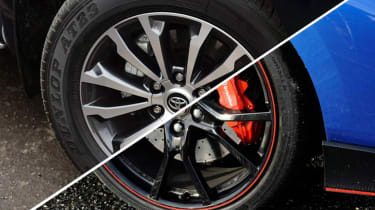
Credit: www.autoexpress.co.uk
How Do You Protect Low Profile Wheels?
If you have low profile wheels on your car, there are a few things you can do to protect them. First, avoid driving over potholes and other obstacles that could damage the wheels. Second, park in covered or underground parking when possible to avoid weather damage.
Finally, keep your tires inflated to the proper pressure to avoid putting too much strain on the wheels. By following these tips, you can help keep your low profile wheels looking good for years to come.
Do Low Profile Tires Damage Easily?
There is no definitive answer to this question as it depends on a number of factors, such as the type of low profile tire, the driving conditions and how well the tires are maintained. However, in general, low profile tires may be more susceptible to damage than regular tires due to their thinner treads. Driving over potholes or other sharp objects can cause punctures or other damage to low profile tires.
It is important to inspect your tires regularly for any signs of damage and to have them repaired or replaced as needed.
How Long Should Low Profile Tires Last?
Low profile tires are designed for performance vehicles and provide a lower stance and improved handling. They typically have shorter tread life than regular passenger car tires, so how long they last depends on many factors.Some things that will affect the longevity of low profile tires are the roads you drive on, your driving habits, vehicle alignment, and tire rotation schedule.
Driving on rough roads or in extreme weather conditions can shorten the lifespan of any tire, so it’s important to take those into account when deciding how long your low profile tires should last.If you’re a aggressive driver who likes to push your car to its limits, you can expect your low profile tires to wear out faster than if you drove more conservatively. The same goes for poor vehicle alignment – if your wheels aren’t pointing straight, it puts unnecessary stress on the tires and will cause them to wear down quicker.
Tire rotation is important for all types of tires, but it’s especially crucial for low profile ones since they have less tread to begin with. By rotating your tires regularly (every 5-7 thousand miles or so), you evenly distribute the wear and tear which helps them last longer overall.In general, most people can expect their low profile tires to last between 20-25 thousand miles before needing to be replaced.
But again, this number can vary depending on individual driving habits and road conditions.
Do Low Profile Tires Give You a Rougher Ride?
No, low profile tires do not give you a rougher ride. In fact, they can provide a smoother ride than traditional tires because they have a shorter sidewall that flexes less when encountering bumps and potholes. Low profile tires also tend to have stiffer carcasses, which helps them maintain their shape and provides better handling.
Conclusion
As anyone who has ever driven on a gravel road knows, low-profile tires are more susceptible to punctures and flats. Here are some tips on how to protect your low-profile tires:1. Avoid driving over sharp objects.
This seems like common sense, but it’s worth repeating. If you can see a nail or piece of glass sticking up, drive around it.2. Check your tire pressure regularly.
Low tire pressure is one of the leading causes of flats and blowouts.3. Inspect your tires for damage before each drive. If you see any cuts or bulges, have the tire repaired or replaced immediately.
4. Drive cautiously on rough roads.
How to Size Tires for Truck
There are a few things to consider when choosing tires for your truck. First, you need to know the size of your truck. This will determine the size of the tires you need.
Second, you need to decide on the type of tire you want. There are three main types: all-terrain, mud-terrain, and highway. All-terrain tires are good for both off-road and on-road use.
Mud-terrain tires are mainly for off-road use and have more tread than all-terrain tires. Highway tires are made for paved roads and have less tread than all-terrain or mud-terrain tires. Third, you need to decide on the brand of tire you want.
There are many brands to choose from, so do some research to find the one that best suits your needs. Once you’ve considered these factors, you’re ready to buy tires for your truck!
- Decide on the type of truck you have
- There are many different types of trucks, each with their own specific tire size
- Determine the size of tires that your truck needs
- You can do this by consulting your truck’s owner’s manual or by measuring the tires yourself
- Once you know the size of tires you need, start shopping around for the best deal
- Be sure to compare prices and reviews before making your final decision
- When you’ve found the perfect tires for your truck, have them installed by a professional mechanic or do it yourself if you feel confident enough
- Finally, enjoy driving your truck with its new, properly sized tires!
Understanding how to pick out the right size Tires, Rims and wheels
Tire Size Calculator
Choosing the right tire size is important for a number of reasons. The wrong size can lead to poor handling, decreased fuel economy, and even safety problems. Fortunately, there are a number of ways to determine what size tires your vehicle needs.
One way to figure out the right tire size is to consult your owner’s manual. This is the best source of information about your specific vehicle. Another option is to look for a placard on the doorjamb or inside the glove compartment that lists recommended tire sizes.
If you don’t have access to your owner’s manual or placard, you can also use a tire size calculator like the one offered by Tire Rack . This handy tool allows you to input your vehicle make and model as well as other information such as wheel size and offset. It then provides suggested tire sizes based on that information.
Of course, it’s always best to consult with an expert before making any final decisions about tires. A professional can help you understand all the factors involved in choosing the right tires and can offer additional insights about which options might be best for your needs.

Credit: www.tirebuyer.com
How Do I Know What Size Tires Will Fit My Truck?
There are a few things you need to take into consideration when purchasing tires for your truck. First, you need to know the size of your truck’s wheels. You can find this information in your owner’s manual or by measuring the wheels yourself.
Once you know the wheel size, you can purchase tires that will fit those wheels.Next, you need to consider the width of the tires. The width is measured in millimeters and can be found on the sidewall of the tire.
You’ll want to make sure that the width of the tires is appropriate for the width of your truck’s wheels. If you have wide wheels, you’ll need wider tires and vice versa.Finally, consider the tread pattern of the tire.
This is important because it affects how well your truck will grip the road. Make sure to choose a tire with a tread pattern that is suited for driving in all types of weather conditions.Now that you know these things, choosing tires for your truck should be a breeze!
What Do the 3 Numbers Mean on Tire Size?
The three numbers on a tire’s sidewall indicate the tire’s width, aspect ratio and rim size, in that order. Width is the measurement of the tire from sidewall to sidewall in millimeters. Aspect ratio is the height of the tire’s cross-section to its width.
Rim size is the diameter of the wheel that the tire is mounted on in inches.
How Do You Calculate a Tire Size?
When it comes to calculating tire size, there are a few different factors that you need to take into account. First, you need to know the width of the tire in millimeters. This is usually listed on the sidewall of the tire.
Next, you need to know the aspect ratio of the tire, which is also listed on the sidewall. The aspect ratio is the height of the sidewall divided by the width of the tire. Finally, you need to know the diameter of the wheel in inches.
With all of that information in hand, you can now use a simple formula to calculate your tire size. Just take the width of the tire and multiply it by 25%. Then add that number tothe diameterofthe wheel.
That will giveyou your finaltire sizein inches. For example, ifyou havea 215mm wide tire with an aspect ratioof 60%, andyour wheelis 15 inches in diameter, your finaltire size would be: ((215mm x 0.25) + 15″) = 27″.Keep in mind that this formula only works for metric tires (width in mm), and not for standard tires (width in inches).
Ifyou’re not surewhich typeof tiryou have, just look atthe width listedon Sidewall – ifit’s expressedin millimeters(mm), thenyou canusethis formula;ifit’sexpressedin inches(“),thenyou’llneedto usethe standardformulato calculatetiresizeinstead(describedbelow).To convert millimetersinto inchesto usethe standardformula: 1 inch= 25.4 mm so divideby 25.4to convertthe widthfrom mmto inchesthenfollowstandardcalculationprocedureas describednext..
How Much Bigger of a Tire Can I Put on My Truck?
The size of tires that can be safely installed on a truck depend on several factors, including the truck’s axle width, frame clearance and tire tread width. Most trucks can accommodate up to a 33-inch tire without any modifications. Some trucks may be able to fit larger tires with some modifications, such as installing a body lift kit or fender flares.
Conclusion
If you’re in the market for new tires for your truck, it’s important to make sure you get the right size. Here are a few tips on how to size tires for truck:1. First, consult your truck’s owner manual or the placard on the doorjamb to find out what size tires your truck needs.
2. Once you have that information, you can start shopping around for tires. Make sure to pay attention to load capacity and speed rating when selecting tires.
3. When you’ve found a few potential candidates, use a tire calculator (like this one from Tire Rack) to enter in the specs of the tire and see if it will work with your truck.
4. Finally, take your time when installing new tires – don’t just assume they’ll fit because they’re the same size as your old ones. Always double check before driving off!

How to Turn Tires into Planters
One way to reuse old tires and give your garden a bit of an industrial look is to turn them into planters. It’s a relatively easy process that can be completed in an afternoon. You’ll need a few supplies, including a power drill, soil, plants, and some patience.
But the end result will be worth it – unique planters for your yard or patio that are sure to get attention.
- Decide which tires you would like to use for your planters
- You may want to consider the size and weight of the tires when making your decision
- Use a drill to make drainage holes in the bottom of each tire
- These holes will allow excess water to drain from the soil, preventing your plants from becoming waterlogged
- Fill each tire with soil, using a shovel or spade to transfer the dirt from a bag or other container
- Be sure to fill the tire all the way to the top; this will leave room for planting
- Choose your plants! When selecting plants for your new planters, be sure to consider their watering needs; succulents and cacti, for example, require very little moisture compared to most other types of plants
- Plant your chosen plants in the Tire Planters, using care not to damage their roots as youtransfer them into their new homes
How to turn used car tire into a flower pot
How Do You Turn a Tire into a Planter?
If you’re looking for a unique way to spruce up your outdoor space, why not try tire planters? Tire planters are easy to make and add a quirky touch to any garden. Plus, they’re a great way to recycle old tires that would otherwise end up in landfill.
Here’s how to turn a tire into a planter:1. Choose a tire. Any size will do, but keep in mind that smaller tires will be easier to handle.
It’s also important to make sure that the tire is free of any chemicals or contaminants that could harm plants. If you’re not sure, it’s best to err on the side of caution and opt for a new tire.2. Prepare the tire.
Once you’ve selected a suitable tire, clean it out with soap and water. Then, use a drill fitted with a large bit to make drainage holes in the bottom of the tire. These holes are essential for preventing your plants from becoming waterlogged.
3. Fill the tire with soil. Once your drainage holes are in place, fill the tire with potting mix or garden soil. Be sure to pack it down firmly so that there’s no air pockets which could cause problems later on.
4., Add your plants! Now comes the fun part – choosing what plants you want to put in your new planter! Consider things like height, color, and whether or not the plant needs full sun or partial shade when making your selection.
Once you’ve decided, carefully transfer your chosen plants into the soil-filled tire being careful not to damage their roots in the process..
Make sure that each plant has enough room to grow and isn’t overcrowded in the planter.. Water well after planting and give your new creation regular TLC throughout the growing season!
Can You Use a Tire As a Planter?
A tire can actually make a great planter! Just be sure to drill drainage holes in the bottom before filling with soil. You can either place the tire directly on the ground or elevated on a stand.
If you choose to elevate your tire planter, be sure to use a heavy duty stand that can support the weight of the filled tire. For extra stability, you can also fill the bottom of the tire with sand or gravel before adding soil.When it comes to plants, just about anything will grow in a tire planter!
Consider using annuals or perennials that spill over the edge of the tire for a cascading effect. Or go for something more vertical like tomatoes or beans. Be sure to select plants that are appropriate for your growing zone and have similar watering needs.
Are Tires Toxic to Use As Planters?
While tires may not be the most attractive planters, they are actually quite safe to use for plants. Tires are made of rubber, which is a non-toxic material. However, if you’re concerned about chemicals leaching into the soil, you can line the tire with a heavy-duty liner before adding soil and plants.
How Do You Plant a Plant in a Tire?
It’s actually pretty easy to plant a plant in a tire! Here’s what you’ll need:-A tire
-Some potting soil
-A plant that you want to put in the tire
-Something to make drainage holes in the bottom of the tire (a drill works well for this)
Once you have all of your supplies, just follow these simple steps:1. Make sure the tire is clean and dry on the inside. If it’s not, give it a quick rinse with some water.
2. Use your drill (or whatever else you’re using to make holes) to make several small holes in the bottom of the tire. These holes will allow excess water to drain out, so be sure to make enough of them!
3. Fill the tire with potting soil, leaving enough room at the top for your plant.
4. Gently remove your plant from its current pot and place it in the center of the tire filled with soil. 5. Backfill any empty space around your plant with more soil, tamping it down gently as you go. 6. Water your new planting thoroughly, making sure that excess water can drain out through those holes you made earlier.

Credit: www.pinterest.com
How to Turn a Tire Inside Out for a Planter
If you’re looking for a creative way to spruce up your garden, look no further than turning a tire inside out for a planter! This simple DIY project is sure to add some personality to your outdoor space. Here’s how to do it:
1. Start by finding an old tire that you can repurpose. If it’s in good condition, you can simply clean it and use it as is. If not, you may need to sand down the surface or even paint it to get the desired look.
2. Once your tire is ready, flip it upside down so that the rim is facing upwards.3. Fill the tire with soil, leaving enough room at the top for plants or flowers.4. Plant your chosen greenery in the Tire Planter and water regularly.
5. Enjoy your new Tire Planter!
Conclusion
This blog post provides a step-by-step guide for turning old tires into planters. First, the tire is cut in half using a sharp knife. Next, holes are drilled into the bottom of the tire halves for drainage.
The tire halves are then filled with soil and plants are added. Finally, the tires are placed in a sunny location and watered regularly.
How to Balance Large Truck Tires
The process of balancing large truck tires is not as difficult as it may seem. There are a few things that need to be taken into account, but with a little know-how, anyone can do it. The most important thing to remember is that the weight of the truck must be evenly distributed on all four tires.
This can be accomplished by using a tire balance machine.
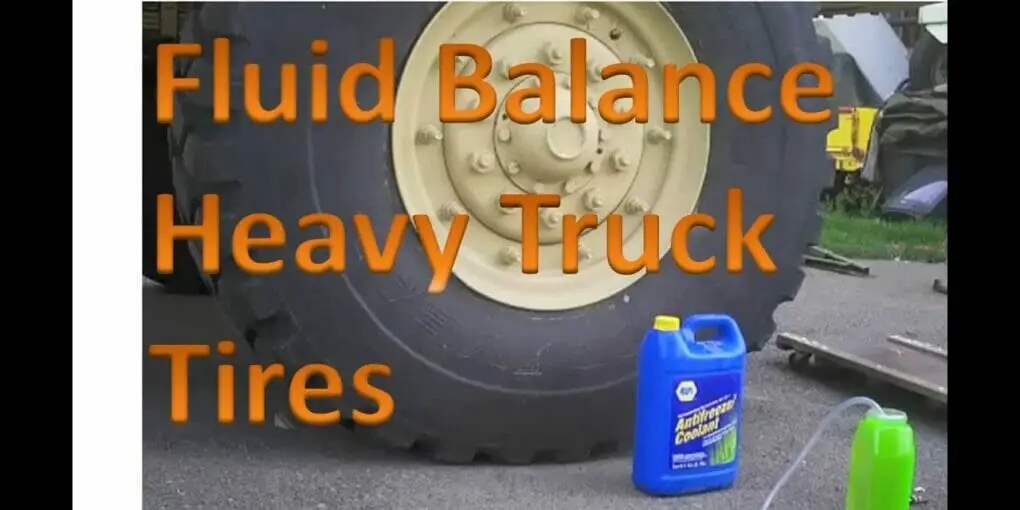
Balancing a commercial truck wheel & Tire
- Park the truck on a level surface and set the parking brake
- Place chocks in front of and behind the rear wheels
- Loosen the lug nuts on each wheel using a wrench, then remove them completely by hand
- Raise the truck up with a jack and support it with jack stands placed under the frame near the wheels you’ll be working on
- Remove the tire from the wheel using a tire iron or tire changer machine, if available
- Inspect the inside of the tire for any objects that may be causing an imbalance, such as nails or pieces of metal
- Remove any foreign objects found inside the tire with pliers or needle-nose grips
- Place lead weights on either side of the tire at equal distances from each other until the desired balance is achieved (usually between 8 and 16 ounces)
- Replace the tire onto the wheel and hand-tighten all lug nuts before lowering the truck off of its jack stands withthe jack
Balancing 35 Inch Tires
If your vehicle is equipped with 35-inch tires, it’s important to ensure that they’re properly balanced. This will help extend the life of your tires and improve your vehicle’s overall performance. Here are a few tips on how to balance 35-inch tires:
1. Use a tire balancing machine specifically designed for 35-inch tires. These machines can be found at most auto shops and tire dealerships.2. Follow the manufacturer’s instructions when using the machine.
3. Check the balance of your tires regularly, especially if you notice any uneven wear on them. Uneven wear can be an indication that they’re not properly balanced.
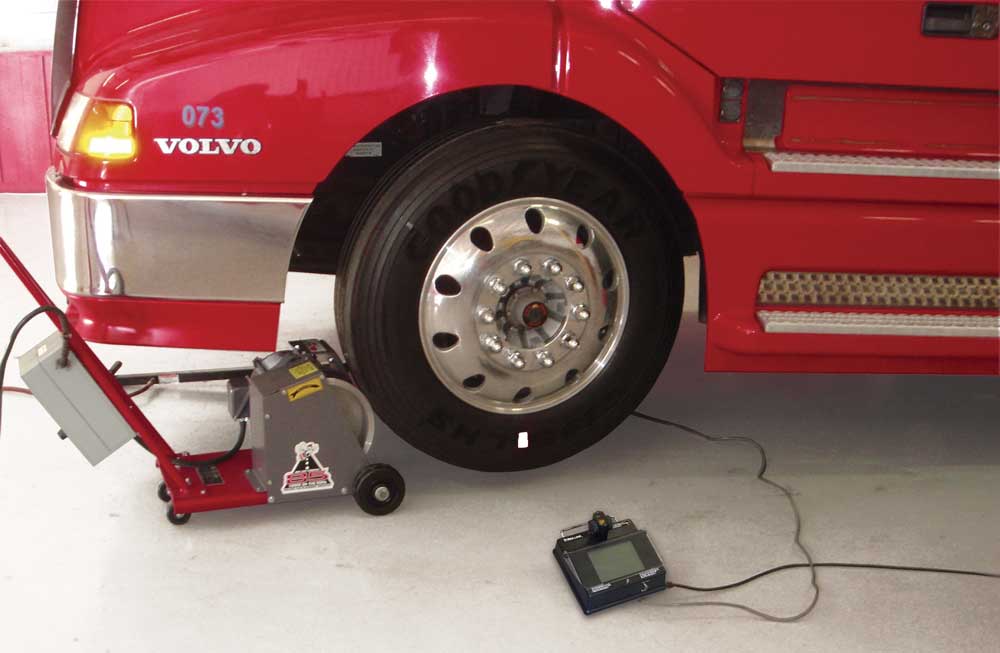
Credit: www.beeline-co.com
Can You Balance Big Truck Tires?
It is possible to balance big truck tires. This can be done by using a machine that is specifically designed for this purpose. The machine will spin the tire and then add weights to the outside of the rim in order to balance it.
How Do You Balance Tires on a Truck?
If you have ever wondered how to balance tires on a truck, the process is actually quite simple. Although it may seem like a daunting task, with a little patience and attention to detail, you can easily get the job done.The first step is to find a flat surface on which to work.
You will need to be able to raise the truck up off of the ground in order to reach the wheels, so make sure that you have enough space. Once the truck is raised, remove the hubcaps or wheel covers from each tire.Next, using a tire iron, loosen each lug nut slightly.
You do not want to remove them completely, just loosen them enough so that they can be turned by hand. Once all of the lug nuts are loosened, use your jack to raise each tire off of the ground one at a time.Now that the tires are off of the ground, you can begin balancing them.
To do this, place a small weight on each side of the tire until it is balanced evenly. The weights can be anything from coins to washers – as long as they are relatively equal in size and weight. Once all four tires are balanced, replace each one on the truck and tighten down the lug nuts securely.
That’s all there is to it! With just a little bit of effort, you can easily balance your own truck’s tires and enjoy a smoother ride going forward.
Are Larger Tires Harder to Balance?
No, larger tires are not harder to balance. In fact, they can be easier to balance than smaller tires because there is more surface area for the weight to be evenly distributed. Larger tires also have a lower center of gravity, which makes them less likely to wobble or vibrate when driving.
Do Pickup Truck Tires Need Balanced?
Most people believe that pickup truck tires do not need to be balanced, but this is not the case. Just like any other vehicle, pickup trucks need all four of their tires to be in balance. This helps to ensure a smooth ride and prevents premature tire wear.
There are a few different ways to tell if your pickup truck’s tires need to be balanced.
Conclusion
It’s no secret that large trucks put a lot of wear and tear on their tires. But did you know that there are ways to help extend the life of your truck’s tires? Here are some tips on how to balance large truck tires:
1. Inspect your tires regularly for signs of uneven wear. This can be caused by factors such as overloading, improper inflation, or misalignment.2. When you notice uneven wear, have your truck’s alignment checked and adjusted as needed.
This will help prevent further damage to the tires.3. Keep your truck’s tires properly inflated. This will help reduce stress on the tire walls and improve fuel economy.
4. Rotate your truck’s tires according to the manufacturer’s recommendations. This will help ensure even wear over time.5. When it’s time to replace your truck’s tires, choose a quality brand that is designed for heavy-duty use.
This will help ensure long-term performance and durability.
How to Recycle Tires for Profit
Recycling tires is not only good for the environment, but it can also be profitable. There are a number of ways to recycle tires, and each one can be profitable if done correctly. Here are a few ideas on how to recycle tires for profit:
-Sell used tires to scrapyards or recycling centers. This is probably the most common way to recycle tires, and it can be quite profitable. Used tires can be sold for a few dollars each, and many recycling centers will even pay you by the pound.
-Start a used tire business. This is a slightly more complicated way to profit from recycled tires, but it can be very lucrative if done correctly. There are a number of businesses that specialize in selling used tires, and they can often get very good prices for their products.
-Make art out of old tires. This may not be the most practical way to recycle tires, but it can certainly be profitable. If you have an artistic flair, you could make all sorts of things out of old tyres – from sculptures to jewelry – and sell them online or at craft fairs.
- Collect used tires from businesses or individuals who are looking to get rid of them
- Sort the tires by size and type
- Clean the tires and remove any dirt or debris
- Prepare the tires for sale by repairing any damage and adding a coating to protect them from weathering
- Sell the tires to customers who can use them for their own purposes, such as creating tire swings or using them as planters
How to Start a Tire Recycling Business
Is a Tire Recycling Business Profitable?
A tire recycling business is a very profitable way to recycle tires. There are many ways to recycle tires, and the most common method is by using a tire recycling machine. This machine can be used to recycle any type of tire, from passenger car tires to truck tires.
The machine works by breaking down the rubber in the tires into small pieces, which can then be recycled into new products.One of the most common products made from recycled tires is rubber mulch. This product is made by grinding up the small pieces of rubber into a fine powder and then mixing it with water.
The mixture is then spread out onto a surface, such as a playground, where it dries and hardens into a durable mulch that looks just like regular wood mulch. Rubber mulch is becoming increasingly popular because it is environmentally friendly and long-lasting. It also has many other uses, such as landscaping, gardening, and even in construction projects.
Another common use for recycled tires is tire-derived fuel (TDF). TDF is made by shredding or chipping whole tires into small pieces and then burning them to create energy. TDF provides an alternative fuel source for power plants and other industrial facilities that would otherwise rely on fossil fuels such as coal or natural gas.
Burning TDF releases fewer emissions than burning these traditional fuels, making it a cleaner option for power generation.
How Much Does a Ton of Shredded Tires Cost?
A ton of shredded tires typically costs between $30 and $70. The price will depend on the supplier, the quality of the shreds, and other factors.
How Do Junk Tires Make Money?
junk tires make money by being recycled and used to create new products. The recycling process begins by breaking down the tire into its component parts. The rubber, steel and fabric are all separated and then cleaned.
The rubber is then melted down and formed into new products like flooring, mats and gaskets. The steel is recycled and used to create new metal products. And the fabric is often used to create insulation or soundproofing materials.
What Can You Make Out of Recycled Tires?
You can make a lot of different things out of recycled tires. Some people use them to make planters or gardens, while others use them to make furniture or sculptures. You can also use recycled tires to make playground equipment, like swings and see-saws.

Credit: www.amazon.com
Companies That Buy Scrap Tires for Tdf
Tdf, or tire-derived fuel, is a valuable commodity that can be used in many different industries. There are many companies that buy scrap tires for tdf, and each one has their own process and requirements. It’s important to do your research before you sell your scrap tires, so you can get the best possible price.
Here are some tips to help you get started:1. Find a reputable company: There are many companies that buy scrap tires for tdf, but not all of them are created equal. Do some research to find a company that has a good reputation and is known for paying fair prices.
2. Know what type of tire you have: Not all tires are suitable for tdf use. Make sure you know what type of tire you have before contacting a buyer.3. Understand the market value: The price of tdf fluctuates based on supply and demand.
Keep tabs on the market value so you can negotiate the best possible price for your scrap tires.4. Get multiple offers: Don’t just accept the first offer you receive.
Conclusion
Tires are one of the most common items that end up in landfills. In fact, it is estimated that there are about 1 billion tires discarded each year in the United States alone. However, tires can be recycled and reused in a variety of ways.
Not only is this good for the environment, but it can also be profitable.There are a number of ways to recycle tires for profit. One option is to sell them to a tire recycling company.
These companies will pay you for your unwanted tires and then process them into new products, such as tire-derived fuel or rubber mulch.Another way to make money from recycling tires is to start your own tire recycling business. This can be done by collecting used tires from businesses and individuals and then selling them to companies that need them.
There is a lot of money to be made in this business, but it does require some initial investment and effort.If you’re looking for a more creative way to recycle tires, you can even use them to make art! There are many artists who create sculptures and other pieces using old tires.
This is a great way to give new life to something that would otherwise end up in a landfill.No matter how you choose to recycle tires, you’ll be doing something good for the environment while also making some extra cash. So why not give it a try?
How Much to Get Rid of Old Tires
It’s finally spring and you’re ready to tackle some long-awaited home improvement projects. One item on your list is to get rid of those old tires that have been sitting in your backyard for who knows how long. But before you load them up and haul them away, you need to figure out how many tires you can legally get rid of at one time.
What Happens To Used Tires? | Free Documentary Shorts
If you have old tires that you need to get rid of, there are a few options available to you. You can take them to a tire recycling center, or you can dispose of them yourself.Tire recycling centers will accept old tires and recycle them into new ones.
This is the best option if you want to ensure that your old tires don’t end up in a landfill.If you decide to dispose of your old tires yourself, there are a few things you need to keep in mind. First, check with your local waste management company to see if they accept tires.
If they do, make sure to follow their guidelines for disposal.You can also take your old tires to a scrap yard or salvage yard. They may be willing to pay you for your old tires, or they may simply dispose of them for you.
Finally, if all else fails, you can always put your old tires in the trash. However, this should be a last resort as it’s not the most environmentally-friendly option.
How Much to Get Rid of Old Tires near Round Rock, Tx
If you have old tires that you need to get rid of, there are a few options available to you. You can take them to a local tire recycling center or scrap yard, or you can hire a company to pick them up and dispose of them for you.There are a few things to keep in mind when disposing of old tires.
First, make sure that the tires are properly inflated before taking them anywhere. This will help prevent any accidents during transport. Second, be aware that many recycling centers charge a fee for each tire disposed of.
The fees vary depending on the size and type of tire, so it’s important to call ahead and ask about pricing before taking your tires in. Finally, always double check with the company or facility where you’re disposing of the tires to make sure they accept them. Some places only accept certain types or sizes of tires, so it’s best to be prepared beforehand.
With these tips in mind, getting rid of your old tires should be a breeze!

Credit: www.covingtonky.gov
How Do I Get Rid of Old Tires in Texas?
There are a few options for getting rid of old tires in Texas. One option is to take them to a tire recycling center. This is a facility where tires are brought in and recycled into new products, such as rubber mulch or playground flooring.
Another option is to take them to a landfill. However, many landfills will not accept tires because they are difficult to compact and can catch fire easily. The best option is to find a company that specializes in tire recycling and disposal.
These companies will pick up the tires from your home or business and recycle them properly.
Can I Do Anything With Old Tires?
If you have old tires taking up space in your garage, you may be wondering if there is anything you can do with them. The answer is yes! Here are a few ideas of what you can do with your old tires:
1. Use them as planters. Cut the tire in half and fill it with soil. Then, plant your favorite flowers or vegetables inside.
You can even paint the tire to add some personality to your garden.2. Make a swing out of them. All you need is a few ropes and some elbow grease and you’ll have a fun backyard swing in no time.
Kids and adults alike will enjoy spending time swinging on hot summer days.3. Create a raised garden bed. If you don’t want to use tires as planters, you could create a raised garden bed out of them instead.
This is a great way to grow vegetables or flowers without having to bend over all the time – perfect for those with back problems!4. Use them as weights when working out. Tires make great weights for lifting or doing other exercises such as push-ups or sit-ups outside.
Just make sure they’re securely fastened so they don’t roll away while you’re working out!5., Recycle them at your local recycling center..
What is the Tire Disposal Fee in Illinois?
In Illinois, the tire disposal fee is $2 per passenger car tire and $3 per truck tire. The fee is used to support the state’s Tire Recycling Program, which helps reduce environmental pollution and provides recycled materials for a variety of uses.
Where Can I Get Rid of Old Tires in My Area?
There are a few options for getting rid of old tires in your area. One option is to take them to a tire recycling facility. Many communities have these facilities and they will recycle your old tires into new ones.
Another option is to sell your old tires to a scrap dealer. Scrap dealers will usually pay you by the pound for your old tires. You can also try posting an ad online or in a local classifieds section to see if anyone is interested in buying them from you.
Conclusion
If you’re wondering how much it would cost to get rid of your old tires, the answer may surprise you. While the price of disposing of a single tire can vary depending on your location, the average cost is around $5 per tire. That means that if you have four old tires to get rid of, it would cost you about $20.
While this may seem like a lot of money, it’s important to remember that improperly disposed of tires can be a serious environmental hazard. They can release harmful chemicals into the air and water, and they can also attract pests like mosquitoes and rats. So while it may cost a bit to dispose of your old tires properly, it’s worth it for the sake of the environment.
How to Fix Cupped Mud Tires
If you have ever driven down a dirt road, you know that the ride can be pretty bumpy. But what happens when your tires start to cup? This can cause even more problems and make your ride even rougher.
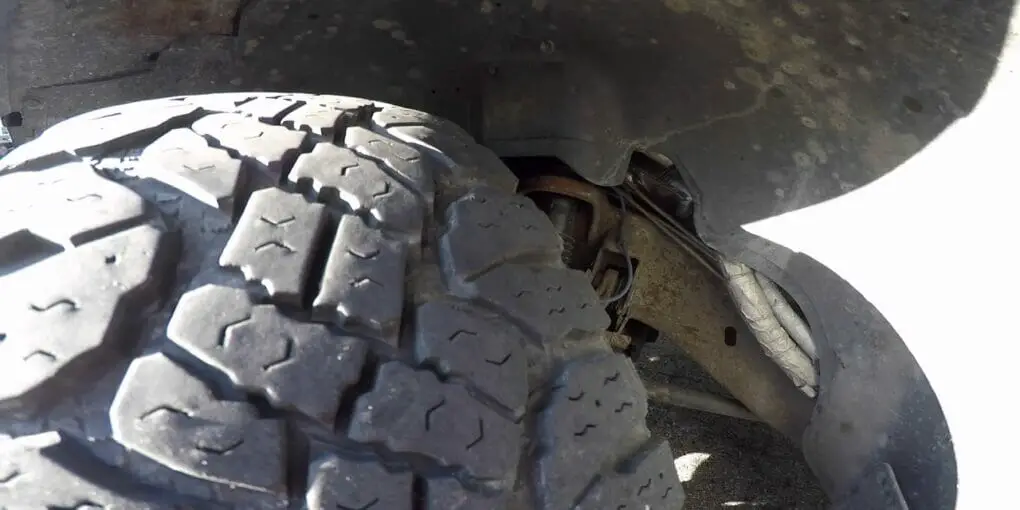
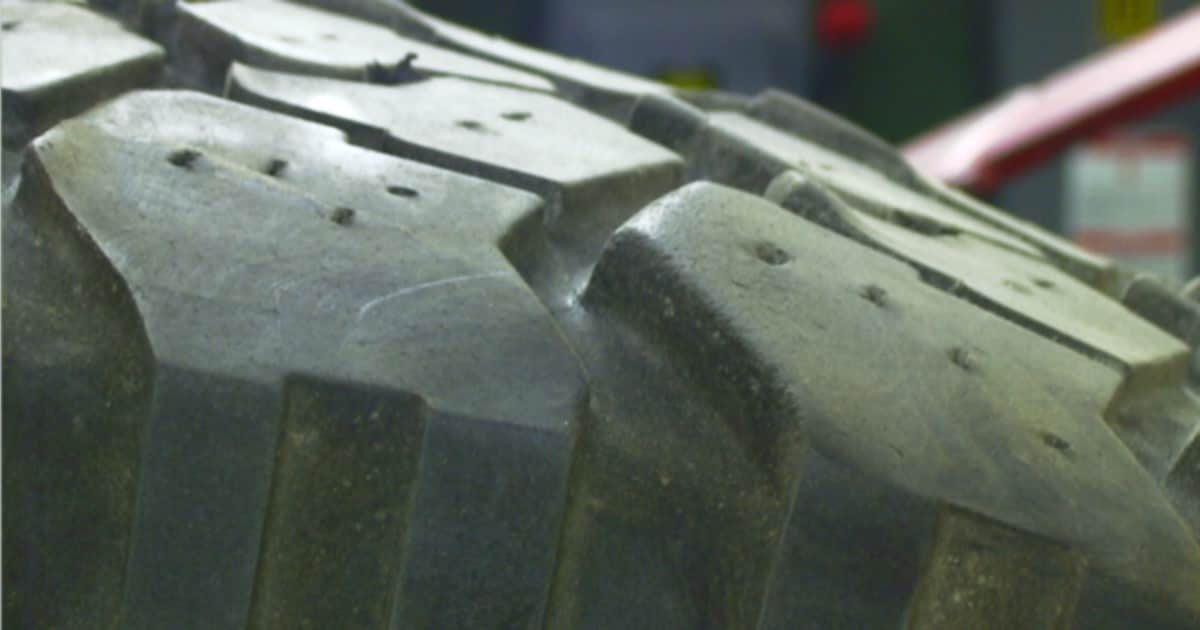
Cupping is when the tread on your tire starts to wear down unevenly, causing it to look like little Cups. This can happen for a number of reasons, but the most common is hitting bumps or potholes in the road. If you have cupped tires, don’t worry, there are ways that you can fix them.
- Check the condition of your tires
- If they’re excessively worn, they may need to be replaced
- Use a tire gauge to check the air pressure in each tire
- adjust as necessary
- Inspect your wheels for damage and make sure they’re properly aligned
- Use a mud-specific tire cleaner to clean any build-up on your tires
- Apply evenly and let sit for a few minutes before rinsing off completely
- Once your tires are clean, apply a layer of mud-specific tire protectant
- This will help keep them from getting caked with mud in the future
2017 Chevrolet Duramax 3500HD tire cupping fix
Will Cupped Tires Smooth Out
A cupped tire is one that has a bulge in the center of the tread. This can happen for a number of reasons, but most often it’s due to wear and tear. While not always immediately noticeable, a cupped tire will eventually lead to an uncomfortable ride.
The good news is that this problem can be fixed relatively easily.If you have a cupped tire, the first thing you’ll want to do is take it to a qualified mechanic or tire specialist. They’ll be able to tell you for sure whether or not your tire can be saved.
In some cases, they may simply need to adjust the pressure or add a bit of air. However, if the damage is more severe, they may need to replace the entire tire.Don’t ignore a cupped tire!
Not only will it give you an uncomfortable ride, but it could also lead to further damage down the road. If you’re not sure how to fix the problem yourself, take it to a professional and have them take care of it for you.
Credit: www.goodyear.com
How Do You Fix a Mud Tire Cupping?
Mud tires are designed to provide traction in off-road conditions, but they can develop a condition known as cupping if they’re not properly maintained. Cupping occurs when the tread of the tire wears unevenly, causing it to cup or form small pockets. This can happen for a number of reasons, including underinflation, overloading, improper alignment, or even just normal wear and tear.
Mud tires are especially susceptible to cupping because of the way they’re designed – their large tread blocks make them more likely to deform as they wear down.If you notice your mud tires beginning to cup, there are a few things you can do to try and fix the problem. First, check your tire pressure and adjust it as needed – underinflated tires are more likely to cup.
Next, take your vehicle in for an alignment check – improper alignment can causecupping. Finally, inspect your suspension and shocks – if they’re worn out or not functioning properly, they may be contributing to the problem. If all else fails, you may need to replace your mud tires – once cupping starts, it’s difficult to reverse the process.
Can Cupped Tires Be Repaired?
The quick answer is yes, cupped tires can be repaired. But it’s not a simple fix, and the results may not last as long as you’d like.Cupping occurs when the tread of a tire wears unevenly.
The result is a “cup” shape in the tire that causes it to vibrate when driven on. This can be extremely annoying and potentially dangerous if left unchecked.There are several possible causes of cupping, but the most common is an issue with the suspension.
If your suspension isn’t working properly, it can cause the tires to wear unevenly. Another common cause is driving on roads that are in poor condition – think potholes, speed bumps, etc. Basically anything that puts extra stress on one side of the tire can lead to cupping.
So how do you fix it? The first step is to have your suspension checked out by a professional. If they find that everything is in working order, then you’ll need to focus on repairing the damage to your tires.
This usually means getting them “re-treaded” which essentially means adding new tread to the existing tire (think of it like getting new shoes with more tread).It’s important to note that this isn’t a perfect solution and over time, you may start seeing signs of cupping again. That said, if your suspension is in good condition and you take care of your tires, you should be able to get many miles out of them before having to worry about this issue again.
How Do You Smooth Out Cupped Tires?
If your car has cupped tires, it’s likely that the front end is out of alignment. You can tell if your tires are cupped if you see bald spots or uneven wear on the tread. Cupping occurs when the tire hits a bump and the suspension causes the tire to deform.
This deformation puts stress on the tire which eventually leads tocupping.If you have cupped tires, you’ll need to get them replaced or repaired. In some cases, you may be able to have them patched up.
However, this is only a temporary fix and will not prevent the problem from happening again in the future. The best way to fix cupped tires is to get an alignment. This will ensure that your tires are hitting the ground evenly and not putting unnecessary stress on any one area of the tire.
What Causes Mud Tires to Cup?
Mud tires cup when the tread is worn down and no longer evenly supports the weight of the vehicle. This can happen from driving on paved roads, which wear down the tread more quickly, or from using the wrong tire pressure. When mud tires cup, it causes them to vibrate and makes handling the vehicle more difficult.
Conclusion
If your car has cupped mud tires, it’s important to fix them as soon as possible. Cupped tires can cause a number of problems, including decreased fuel efficiency and increased wear and tear on other parts of your car.There are a few different ways to fix cupped mud tires.
One is to use a tire balancer, which will help redistribute the weight evenly across the tire. Another is to use a tire rotator, which will rotate the position of the tire on your car. And finally, you can simply replace the tire with a new one.
Whichever method you choose, it’s important to take care of your cupped mud tires as soon as possible to avoid further damage to your car.
How Long to All-Season Tires Last
How long do all-season tires last? This is a question that many drivers have, as they want to know when they need to replace their tires. All-season tires are designed to last for about 50,000 miles, but this can vary depending on the brand and type of tire.
If you drive in hazardous conditions or do not maintain your tires properly, they may not last as long.
If you’re wondering how long all-season tires last, the answer may surprise you. All-season tires are designed to last for up to 10 years. However, this doesn’t mean that they will always last that long.
Factors such as how often you drive and the type of roads you drive on can affect how long your all-season tires will last.Assuming you take good care of your all-season tires and don’t drive too aggressively, you can expect them to last for at least 7 years. If you live in an area with harsh winters, it’s a good idea to replace your all-season tires after 5 years or so.
This will help ensure that your tires are able to provide adequate traction in snow and ice.Overall, all-season tires are a great option if you’re looking for long lasting tire life. Just be sure to take care of them and don’t push them too hard and they should serve you well for many years to come!
How Long Do All-Season Tires Last Km
When it comes to all-season tires, how long they last really depends on a number of factors. For instance, the quality of the tire will play a big role in how long it lasts. In general, though, you can expect an all-season tire to last somewhere between 30,000 and 50,000 kilometers.
Of course, how often you drive and the conditions you typically drive in will also affect how long your all-season tires last. If you do a lot of driving on rough roads or in extreme weather conditions, your tires won’t last as long as if you mostly stick to highways and drives in fair weather.To get the most out of your all-season tires, make sure to rotate them regularly and have them checked for any damage or wear.
If you take good care of your tires, they should be able to give you many trouble-free kilometers.
How Often Should All-Season Tires Be Replaced?
Assuming you are talking about all-season car tires, it is generally recommended that they be replaced every 6 to 8 years, or sooner if they start to show signs of wear. All-season tires are designed to provide good traction and handling in a variety of conditions, including dry roads, wet roads, and even light snow. However, over time they can become worn down and lose some of their effectiveness.
Additionally, the rubber compound in all-season tires can harden with age, making them more susceptible to punctures and flats. If you notice any changes in your tires’ performance or appearance, it’s a good idea to have them inspected by a professional to see if they need to be replaced.
How Many Miles Do Tires Actually Last?
It’s a common misconception that tires only last for around 20,000 miles. In reality, tires can last much longer than that if they’re properly maintained. With proper care, your tires could easily last for 40,000 miles or more.
There are a few key things you can do to extend the life of your tires. First, make sure you always keep them inflated to the correct pressure. This will help prevent premature wear and tear.
Second, avoid driving on rough or uneven roads whenever possible. This can damage your tires and cause them to wear out faster. Finally, get your tires rotated regularly so that they wear evenly over time.
If you take good care of your tires, they should be able to last for many years. So don’t be afraid to drive on them until they’re truly worn out!
Are Tires Only Good for 5 Years?
No, tires are not only good for 5 years. In fact, they can last much longer than that if they’re properly maintained. However, the average lifespan of a tire is around 10 years.
The main reason why tires only last around 5 years is because of the way they’re made. Tires are made out of rubber and other materials that degrade over time when exposed to the elements. This process is accelerated by heat and UV light exposure, which is why tires tend to wear out faster in hotter climates.
To extend the life of your tires, it’s important to keep them inflated to the proper pressure and to have them regularly rotated and balanced. You should also have them inspected by a professional every few years to check for any signs of wear and tear.
How Can You Tell If All-Season Tires are Still Good?
If you’re not sure whether your all-season tires are still good, there are a few things you can check. First, take a look at the tread depth. All-season tires typically have a tread depth of 9/32 to 11/32 inches.
If the tread depth is less than 9/32 inches, it’s time to replace the tires.You can also check for signs of wear and tear, such as cracks or bald spots. All-season tires should be replaced if they show any signs of damage.
Finally, pay attention to how the tires are performing. If you notice that your all-season tires are slipping or hydroplaning more than usual, it’s time for new ones.All-season tires typically last for about 50,000 miles before they need to be replaced.
However, this varies depending on factors such as driving habits and road conditions. If you drive mostly on highways in good weather conditions, your all-season tires may last longer than if you drive in stop-and-go traffic or in inclement weather.
Conclusion
If you’re wondering how long all-season tires last, the answer is somewhere between 25,000 and 50,000 miles. But there are a few factors that can affect this, including the type of vehicle you drive and how you drive it. All-season tires are designed to provide good traction in a variety of conditions, but they’re not built for speed or off-road driving.
So if you regularly take your car out on the open road or hit the trails, you may find that your all-season tires wear out faster than expected.