
- Home
- Archive: September, 2023
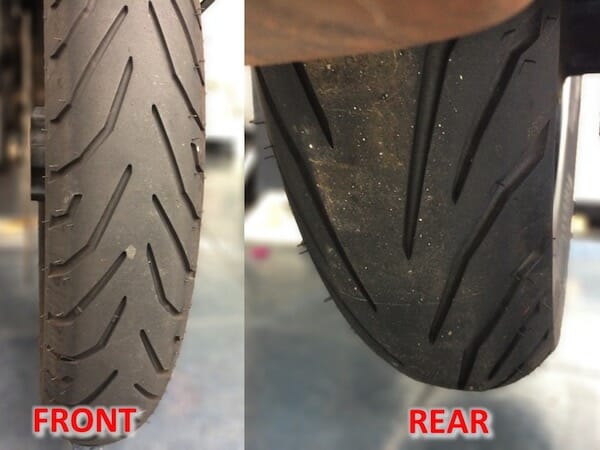
Motorcycle Front Tire Tread Direction
There are many different ways to change the direction of your motorcycle’s front tire tread. Some people believe that it is best to go with the grain, while others think that it is better to go against the grain. There are also those who feel that it does not matter which way you go, as long as you are consistent with the direction you choose.
Most riders don’t think about the direction their front tire is pointing when they’re mounting a new set of rubber. But if you’re one of those who like to be particular about these things, or if you’re just curious, the answer is that it really doesn’t matter which way the tread faces.There are two schools of thought on this subject.
One holds that the front tire should always rotate in the same direction as the rear (counter-clockwise for most bikes). The logic here is that both tires will then scrub in and clean out any debris that gets lodged in the treads.The other school argues that it’s actually better to have the front tire rotating in the opposite direction of the rear (clockwise for most bikes).
The thinking here is that any debris will be thrown clear of the bike by the rotation of the front tire before it has a chance to build up and cause problems.So which is correct? Well, there’s no definitive answer, and ultimately it comes down to personal preference.
If you tend to ride in areas where there’s a lot of sand or gravel kicked up onto the road, running your tires in opposite directions may help keep them cleaner. But if you do a lot of street riding where there isn’t much debris to worry about, either way will work just fine.

Credit: cyrilhuzeblog.com
Which Way Should Motorcycle Tire Tread Face?
Most motorcycle tires have tread patterns that are designed to grip the road well in a number of different riding conditions. However, those same tread patterns can cause problems if they’re not oriented correctly on the wheel. So, which way should motorcycle tire tread face?
The answer may seem like it should be obvious – after all, the vast majority of car and truck tires have their tread facing outward. But for motorcycles, it’s actually best to have the tread pattern facing inward. Here’s why:
When cornering, a motorcycle relies heavily on its tires for traction. If the bike is leaned over in a turn, the contact patch between the tire and road is smaller than it would be if the bike were upright. That means that there’s less surface area for the tire to grip onto, and traction can be compromised.
Having the tread pattern facing inward helps counteract this by providing more surface area for contact with the road. The increased contact patch gives the tire more grip, which can help keep the bike stable through turns. Additionally, having the tread pattern face inward also helps protect against hydroplaning – when a layer of water on the road causes a vehicle’s tires to lose contact and start skidding uncontrollably.
So there you have it: when mounting new tires on your motorcycle, make sure that the tread pattern is facing inward!
Why is Motorcycle Front Tread Backwards?
Motorcycle front tread is backwards for a few reasons. The first reason is that it provides better grip on the road. When you’re turning, the back of the tire is actually gripping the road more than the front.
This gives you better traction and prevents you from sliding out.The second reason is that it helps to evenly distribute weight across the tire. When you’re braking hard or accelerating quickly, all of that weight is transferred to the front of the tire.
If the tread was going forwards, then most of that weight would be concentrated on the part of the tire where there’s less contact with the ground. By having the tread go backwards, it helps to evenly distribute that weight and prevent premature wear on one part of the tire.So those are a couple reasons why motorcycle front tread is reversed.
It may seem counterintuitive at first, but it actually makes a lot of sense when you think about it!
Are Motorbike Tyres Directional?
Most motorbike tyres are not directional, meaning that they can be mounted on either the front or rear wheel. There are some exceptions, however. Some high-performance tyres are designed to rotate in only one direction (usually indicated by an arrow on the sidewall) to minimize wear and tear and maximize grip.
Always check your tyre’s sidewall to see if it is directional before mounting it on your bike.
Which Way Does Tread Face?
Assuming you are talking about a vehicle’s tires, the tread faces down. This is so that when the tire goes around, it can grip the road and provide good traction. If the tread was facing up, it would not be able to do this as effectively.
Tire Tread Pattern Direction – Geek Speak #27 at RevZilla.com
Front Tire on Rear Motorcycle
The front tire on a rear motorcycle is a very important safety feature. It helps to distribute the weight of the bike and rider more evenly, which can help to avoid problems like wheelies and skidding. Additionally, it can provide extra traction in slippery conditions.
How to Tell Which Way a Motorcycle Tire Goes
Are you looking to buy a new motorcycle tire, but unsure of which way it should go on the bike? Tires have a “rotational direction” arrow molded into the sidewall that indicates which way the tire should rotate. But what if the arrow is worn off or you can’t see it?
Here are some tips on how to tell which way a motorcycle tire goes.The first thing you’ll want to do is look at the tread pattern. Most motorcycle tires have a unidirectional tread pattern, meaning they only work effectively in one direction.
The tread pattern will usually be deeper on one side than the other, with larger grooves running perpendicular to the direction of rotation. If you’re not sure which way the tire should rotate, look for an arrow molded into the sidewall – this will indicate the correct rotational direction.If there is no arrow or if it’s worn off, another way to determine rotational direction is by looking at the carcass ply angles.
Carcass plies are layers of fabric that make up the body of a tire (the part that holds air). These plies always angle toward the center of rotation – so if you can see them from outside of the tire, they’ll be pointing inwards towards the center hub. This means that when mounted on your bike, they’ll be angled outwards away from the center hub.
Therefore, if you want your carcass plies pointing outwards (away from center), then that’s indicative of reverse/opposite rotation and your tire is mounted backwards.
Front Tire Motorcycle
The front tire on a motorcycle is one of the most important parts of the bike. It’s responsible for steering, braking, and keeping the bike stable. That’s why it’s important to choose a tire that’s right for your riding style and the conditions you’ll be riding in.
Here are some things to keep in mind when choosing a front tire for your motorcycle.Riding Style: The first thing to consider is how you ride your motorcycle. Are you a aggressive rider who likes to push your bike to the limits?
Or are you a more relaxed rider who takes things at a slower pace? Your riding style will determine what type of tire is best for you. For example, an aggressive rider who likes to do a lot of cornering will want a tire with good grip and stability.
A relaxed rider who takes things easy will want a tire that’s durable and can handle long rides without wearing down too quickly.Conditions: The next thing to consider is the conditions you’ll be riding in. Do you live in an area with lots of rain or snow?
Or do you ride mostly in dry conditions? If you ride in wet or icy conditions, you’ll need a tire that can provide good traction so you don’t slip or slide around. If you ride mostly in dry conditions, then grip won’t be as big of a concern and you can focus on other things like durability and comfort.
Tire Type: There are two main types of tires – tubeless and tube tires. Tubeless tires are becoming more popular because they’re lighter weight and offer better puncture resistance than tube tires. However, they’re also more expensive.
Tube tires are still used by many riders because they’re less expensive and easier to repair if they get damaged.Now that you know what to look for when choosing a front tire for your motorcycle, it’s time to start shopping!
Motorcycle Same Size Tires Front And Back
Most motorcycles come with different size tires front and back. The front tire is usually larger because it carries more of the weight of the bike and rider. The rear tire is smaller because it doesn’t have to work as hard.
Some people believe that having two different size tires makes the motorcycle handle better. Others think that it’s not necessary and that both tires should be the same size.If you’re not sure what size tires to get for your motorcycle, it’s best to consult with a professional.
They can help you choose the right sizes for your specific bike and riding style.
Conclusion
If you’re wondering which direction to have the tread on your motorcycle’s front tire pointing, the answer is simple: it depends on what you need it for. If you’re mostly concerned with grip and traction while cornering, then you’ll want the tread pointing in the same direction as the rear tire. However, if you’re more worried about straight-line stability and braking performance, then you should have the tread pointing in the opposite direction of the rear tire.
Ultimately, it comes down to personal preference and what works best for your riding style.
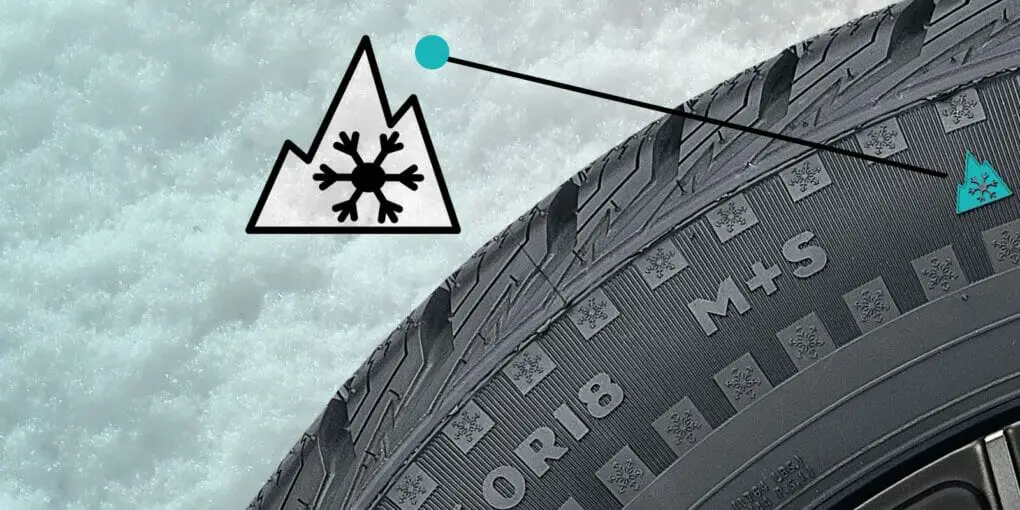
Mountain And Snow Tires
Mountain and snow tires are designed to provide extra traction and stability in winter conditions. They typically have deeper treads than regular tires, and may be studded for extra grip on ice. Mountain and snow tires can improve your safety and control on slippery roads, but they can also make your car more difficult to handle on dry pavement.
Mountain and snow tires are a type of tire designed for use in cold weather and mountainous terrain. They typically have a deeper tread than other tires, as well as special features like studs or chains to improve traction on icy or snowy roads. While mountain and snow tires can be used year-round, they are most commonly seen in the winter months.
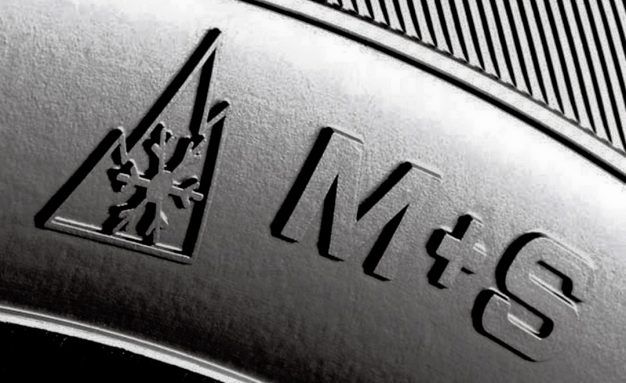
Credit: www.caranddriver.com
What Does the Mountain Symbol Mean on Tires?
The mountain symbol on tires is a reminder to drivers that they need to use extra caution when driving in mountainous regions. The symbol is usually accompanied by the words “Mountainous Region” or “Mountain Driving.”When driving in mountainous regions, it is important to be aware of the dangers that can come with such terrain.
Mountainous regions are often subject to avalanches, mudslides, and rockslides, which can all pose a serious threat to drivers. In addition, the roads in these areas are often much narrower and more winding than those in other parts of the country, making it easy for drivers to lose control of their vehicles.Because of these dangers, it is important for drivers to take their time when driving in mountainous regions and to be extra careful when maneuvering around curves and bends.
If possible, it is also a good idea to avoid driving in these areas during times of heavy rain or snowfall, as this can further increase the risk of accidents.
What Does the Mountain Snowflake on a Tire Mean?
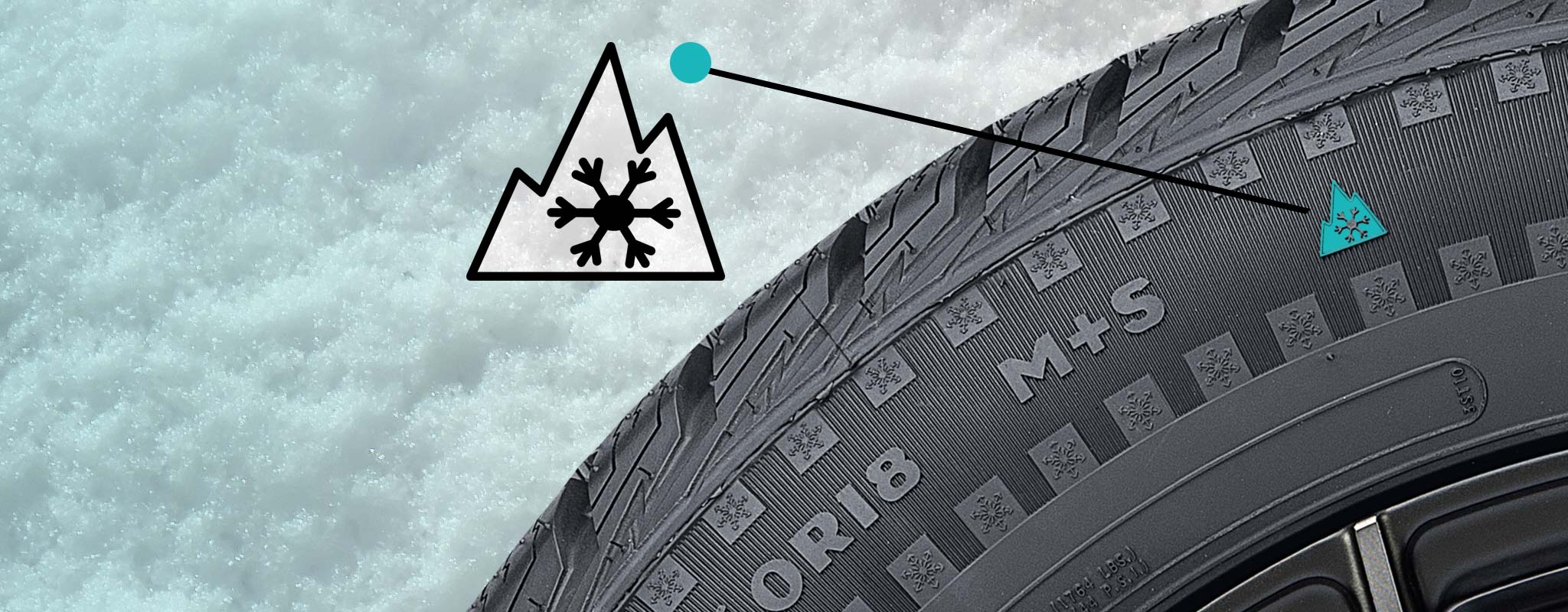
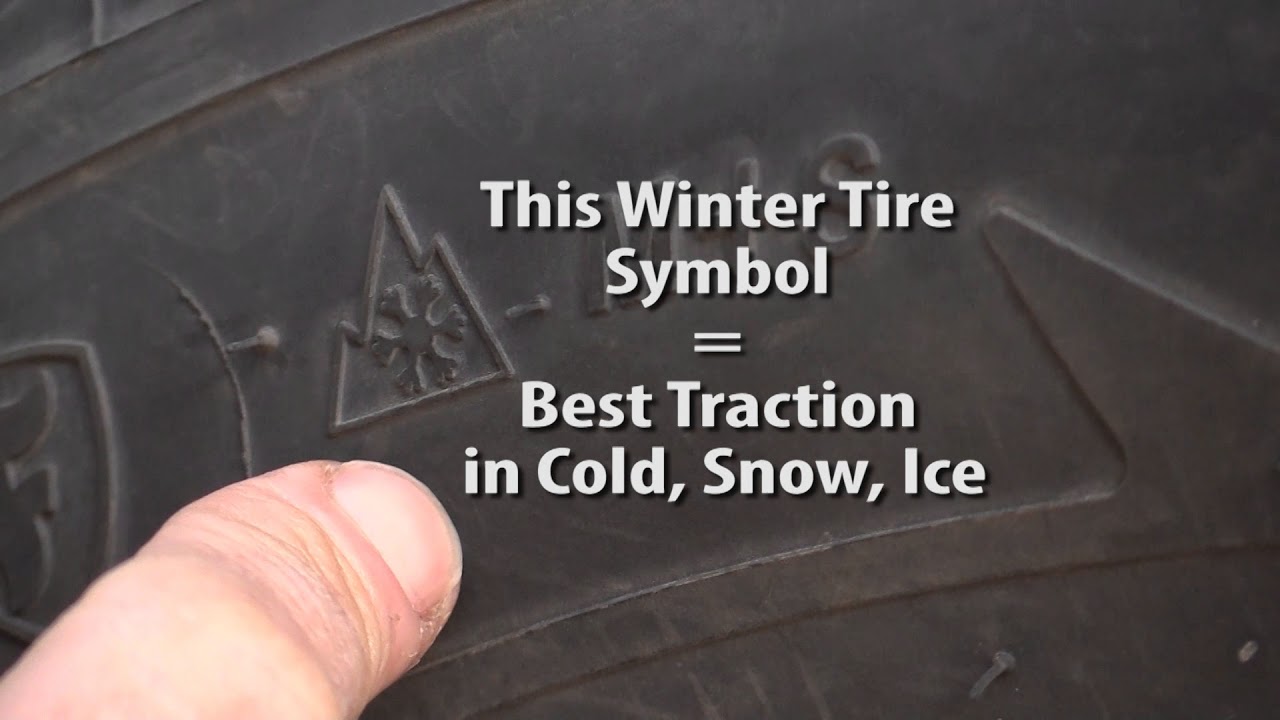
The mountain snowflake on a tire is a symbol that indicates the tire is designed for winter conditions. The symbol is usually found on the sidewall of the tire.
Which Tires Have Snowflakes?
Tires with snowflakes are designed for winter driving conditions and provide better traction on icy and snowy roads. Some tire manufacturers offer tires with different tread patterns and compounds specifically for winter use. Winter tires typically have deeper tread depths than all-season tires to provide better grip on slippery surfaces.
They also often have softer rubber compounds that remain pliable in cold temperatures to maintain traction. Some winter tires are even studded to provide even more traction on ice. Not all snowflake tires are created equal, so it’s important to do your research to find the right one for your vehicle and driving needs.
Are Mt Or At Tires Better in Snow?
There is no definitive answer to this question as it depends on a number of factors, including the type of vehicle you drive, the conditions of the roads where you live, and your personal driving preferences. Some people find that all-terrain (AT) tires perform better in snow than mud-terrain (MT) tires, while others find the opposite to be true. Ultimately, it is up to each individual driver to decide which type of tire works best for them in wintery conditions.
3-Peak Mountain Snowflake Tires
Mountain Snowflake Tires List
Mountain Snowflake Tires are a type of winter tire that is designed for use in mountainous regions. These tires typically have a deep tread depth and are made from a soft compound that helps to provide traction in icy and snowy conditions. Some mountain snowflake tires also feature studs, which further improve traction on ice and packed snow.
Mountain snowflake tires are available in both all-season and winter-specific designs. All-season mountain snowflake tires are typically intended for use in light to moderate snowfall, while winter-specific designs are meant for heavier snowfall and more extreme cold weather conditions.When choosing mountain snowflake tires, it is important to consider the specific needs of your vehicle.
For example, if you frequently drive in heavy snowfall, you will need tires with deeper tread depths and possibly studs for optimal traction. If you only occasionally drive in snowy or icy conditions, all-season mountain Snowflake tires may be sufficient.No matter what type of mountain Snowflake tire you choose, proper maintenance is essential for safe winter driving.
Be sure to regularly check your tires’ tread depth and air pressure, and don’t hesitate to replace them if they become worn or damaged.
3Pmsf
3Pmsf, or 3-phenylmethanesulfonyl fluoride, is a molecule used in organic synthesis as a reagent and protecting group. It is a colorless liquid that is soluble in many organic solvents. 3Pmsf is used to protect alcohols, phenols, and amines from nucleophilic attack during organic synthesis.
It can also be used to remove these groups from molecules after synthesis is complete.
All-Season Tire Symbol
If you’re like most drivers, you’re probably not sure what the all-season tire symbol means. Here’s a quick explanation:The all-season tire symbol is a black letter “A” with a circle around it.
This symbol indicates that the tire has been designed to provide good traction and handling in both dry and wet conditions. All-season tires are a great choice for many drivers because they offer reliable performance year-round.If you’re shopping for new tires, look for the all-season tire symbol to ensure that you’re getting a product that will perform well no matter what the weather conditions are like.
All-Season Tires With Mountain Snowflake Symbol
All-season tires are designed to provide good traction and handling in a variety of weather conditions, including light snow. The mountain snowflake symbol on the sidewall of a tire indicates that it meets specific winter performance criteria set by Transport Canada.All-season tires with the mountain snowflake symbol have been tested and shown to perform well in winter driving conditions, including on ice and in deep snow.
They provide good traction, handling, and braking in cold weather.If you live in an area with heavy snowfall, it is still recommended that you use dedicated winter tires for the best possible performance. Winter tires are specifically designed for use in cold weather and provide superior traction, handling, and braking compared to all-season tires.
If you decide to use all-season tires with the mountain snowflake symbol, be sure to check your local laws before heading out on the road. Some states and provinces require the use of winter tires when driving in certain areas or during specific times of year.The mountain snowflake symbol indicates that a tire meets Transport Canada’s standards for winter performance.
All-season tires with this symbol have been tested to ensure they perform well in various winter driving conditions, including on ice and deep snow.While all-season tires with the mountain snowflake can provide good traction and handling during light snowy conditions, if you live in an area with heavy Snowfall it’s still recommended that you invest In Dedicated winter tired . This Is because dedicated winters Tires Are specificalLy designed for used Colder Weather condition And as such will Provide much better grip handle .
Conclusion
Mountain and snow tires are a great investment for anyone who lives in or frequently visits areas with cold weather and mountainous terrain. These tires provide better traction and stability than regular tires, making it easier to drive in winter conditions. They also tend to last longer than regular tires, so they can save you money in the long run.
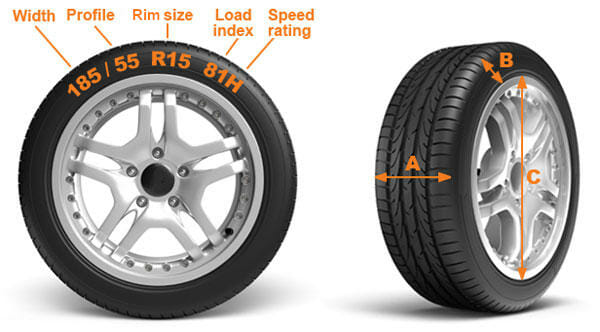
Car Tyre Size Details – Explaining Tire Sizing Methods
Car tyre size is the measurement of a car tyre’s width, height, diameter, and load index. The load index is a number that corresponds to the maximum weight that the tyre can support when inflated to its maximum pressure. The higher the load index number, the greater the weight that the tyre can support.
The width of a car tyre is measured in millimetres (mm), while the height and diameter are both measured in inches. tyres with a larger width provide a better grip on wet or icy roads, but they also create more road noise and may make your car feel less stable at high speeds.
How to Read a Tire Size & Understanding a Tire Sidewall – ABTL Auto Extras
Why is it important to know your car tyre size?Your car’s tyres are one of the most important safety features, so it’s important to make sure they’re properly inflated and in good condition. The best way to do this is to know your car’s tyre size.
This information can be found on the sidewall of your tyres.There are a few reasons why it’s so important to know your car’s tyre size. First, if you don’t have the proper sized tyres on your car, it can affect how the vehicle handles.
Second, if you get a flat tyre, you’ll need to know what size replacement tyre you need. And finally, if you’re ever in an emergency situation where you need to change a tyre, knowing the right size will help ensure that you get back on the road as quickly and safely as possible.
Tyre Size Calculator
Wondering what size tyres you need for your car? You’re not alone. It’s a common question, and one that can be difficult to answer without the right tools.
But never fear, we’ve got you covered with our Tyre Size Calculator. Just enter a few details about your car and driving habits and we’ll recommend the perfect tyre size for you. Plus, we’ll even show you how that tyre size compares to your current tyres.
So why bother with a Tyre Size Calculator? Well, there are a few good reasons. Firstly, it can help you save money.
The right tyre size means less fuel consumption and fewer trips to the petrol station. Secondly, it can improve your safety on the road. The wrong tyre size can adversely affect handling and braking, so it’s important to get it right.
Finally, it can maximise the life of your tyres. With the correct pressure and load rating for your specific vehicle and driving conditions, you’ll get more kilometres out of your tyres before they need replacing.
How to Read Tyre Size
When you’re ready to buy new tyres, you need to know how to read tyre size so that you can make sure you’re getting the right ones for your car. Tyre size is made up of a series of numbers and letters that tell you the width, height, diameter and load rating of the tyre.The first number is the width of the tyre in millimetres.
The second number is the height of the sidewall as a percentage of the width. The third number is the diameter of the wheel in inches. The fourth number is the load rating or maximum weight capacity of the tyre.
To give an example, a tyre with the size 245/40R18 would have a width of 245mm, a sidewall height of 40% of that (98mm), a 18-inch diameter wheel and a maximum weight capacity of 880kg.Now that you know how to read tyre size, it’s time to start shopping for new tyres! Be sure to consult your vehicle’s owner manual or ask a professional at your local tire shop to find out which sizes are recommended for your specific car model.
Wheel And Tyre Sizes Explained
When it comes to wheels and tyres, there are a lot of numbers and letters that can be quite confusing. In this blog post, we will explain what all of the numbers and letters mean when it comes to wheel and tyre sizes. The first number that you will see is the width of the tyre in millimetres.
The second number is the height of the sidewall as a percentage of the width. The third number is the diameter of the wheel in inches. For example, a common size for passenger cars is 195/65 R15.
This means that the width of the tyre is 195mm, the height of the sidewall is 65% of the width (130mm), and the diameter of the wheel is 15 inches. The letter at the end indicates the type of construction used forthe tyre. “R” stands for radial, which is by farthe most common type these days. You may also see “D” for diagonal or “B”for bias-ply tyres, but these are mostly found on older vehicles.
Tyre Profile Explained
There are a few things to consider when purchasing tyres for your vehicle, and one of those is the tyre profile. The tyre profile is the measurement of the height of the tyre sidewall, and it can have an affect on a number of things, such as grip, handling, fuel economy and more. Here’s everything you need to know about tyre profiles.
The first thing to understand is that there are two different types of tyres on the market – low profile tyres and high profile tyres. Low profile tyres have a shorter sidewall height, which means they provide less cushioning and shock absorption than high profile tyres. This can lead to a harsher ride, but it also results in improved grip and handling.
High profile tyres have a taller sidewall height, which means they provide more cushioning and shock absorption than low profile tyres. This can lead to a smoother ride, but it can also result in reduced grip and handling.So, which type of tyre should you choose?
It depends on your driving style and needs. If you’re looking for the best possible performance from your vehicle, then low profile tyres are generally the way to go. However, if you’re looking for a smoother ride or live in an area with lots of potholes or other road hazards, then high profile tyres might be a better option for you.
When it comes to choosing new tyres for your vehicle, make sure you take the time to understand tyre profiles so that you can make the best decision for your driving needs.
Tyre Aspect Ratio
The tyre aspect ratio is the height of a tyre’s sidewall expressed as a percentage of its width. The lower the aspect ratio, the shorter the sidewall and the wider the tyre. The higher the aspect ratio, the taller the sidewall and the narrower the tyre.
The tyres on most cars have an aspect ratio between 60 and 70. This means that if your car’s tyres are 225mm wide, their sidewalls will be between 135mm and 157.5mm tall. Aspect ratios have a direct effect on a number of factors including comfort, handling, grip and fuel economy.
In general, tyres with shorter sidewalls will offer better handling and grip, while those with taller sidewalls will be more comfortable but may sacrifice some performance. Fuel economy is also affected by tyre choice – in general, wider tyres are less efficient than narrower ones as they create more rolling resistance. However, this needs to be balanced against grip levels – if you’re regularly driving in wet or icy conditions, it’s worth sacrificing some efficiency for increased safety.
Credit: whattyre.com
How Do You Read Your Tyre Size?
When you’re looking at your tyre, you’ll notice a series of numbers and letters running around the edge. This is called the tyre size, and it’s there to tell you all sorts of useful things about the tyre. Here’s a quick guide to reading your tyres size so that you can make sure you’re getting the right ones for your car.
The first thing you need to look at is the width of the tyre. This is represented by a number, and it tells you how wide the tyre is from sidewall to sidewall. The next number is the aspect ratio, which tells you the height of the tyre compared to its width.
A higher aspect ratio means a taller tyre, while a lower ratio means a wider tyre. After that, you’ve got two more numbers that are important for understanding your tyres size. The first one is the diameter of the wheel that this tyres will fit onto.
The second is load index, which gives you an idea of how much weight each tyred can carry safely. Finally, there’s a letter code at the end of all this which tells you whether this is a summer or winter tyres (or sometimes all-season). S means summer and T means winter. Now that you know how to read your tyres size, go forth and buy some new ones!
What is the Tyre Size for My Car?
There is no definitive answer to this question as the tyre size for a car can vary depending on the make and model of the vehicle. However, there are some general guidelines that can be followed in order to determine what size tyres are suitable for a particular car.If you are unsure about what size tyres are appropriate for your car, it is always best to consult with the manufacturer or a qualified mechanic.
They will be able to advise you on the correct tyre size based on the make and model of your car.In general, most passenger cars will require tyres that have a width of 185mm-225mm. The width of the tyre is usually indicated on the sidewall of the tyre, so it should be easy to identify.
The height (or profile) of the tyre is also important and this is usually expressed as a percentage of the width e.g. 50% = 125mm high. Again, this information can be found on the sidewall of the tyre.The diameter of the wheel rim is also something that needs to be taken into account when selecting tyres.
The most common sizes for passenger cars are 14 inches and 15 inches, but there are other sizes available too e.g. 16 inches and 17 inches.
How are Tyre Sizes Written?
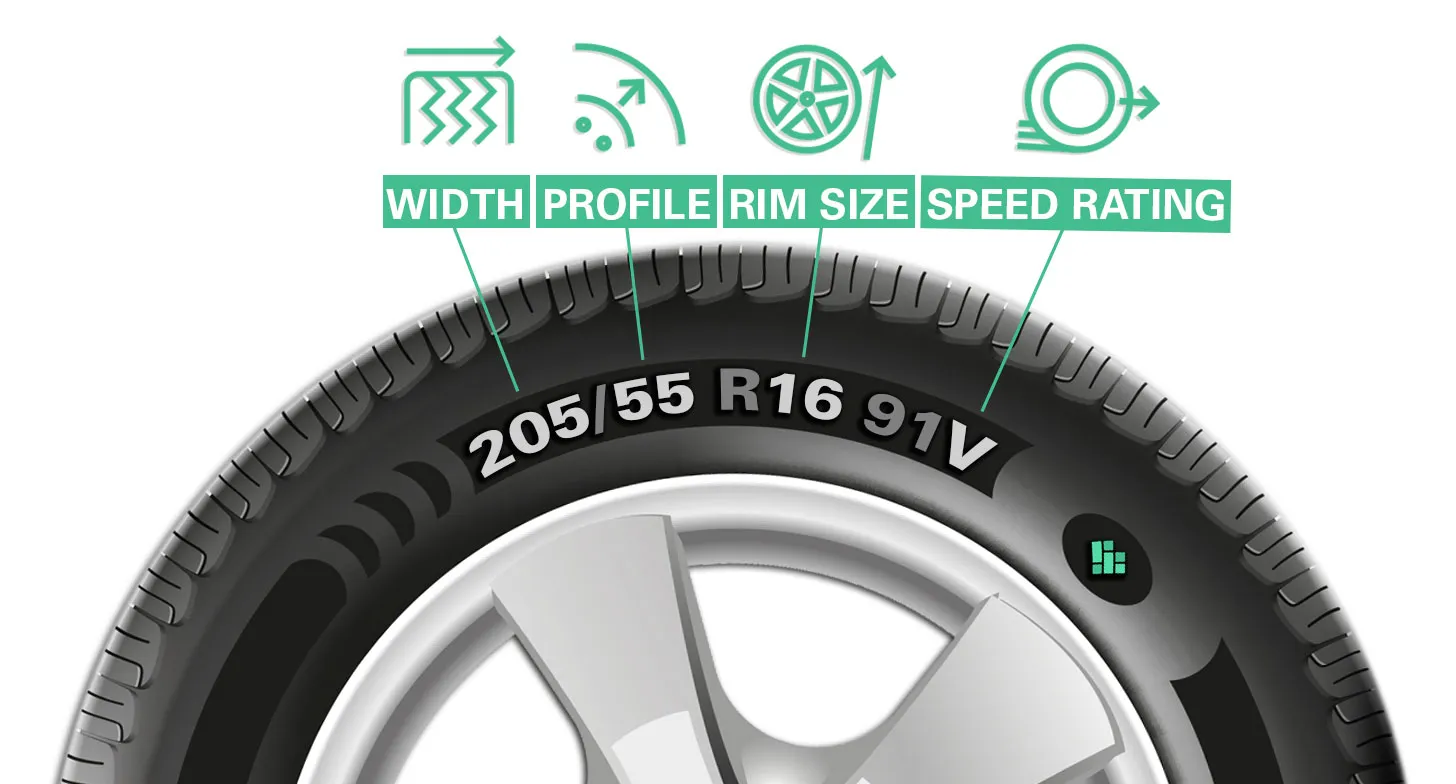
When it comes to tyres, there are a few different ways that sizes can be written. The most common way is by width, aspect ratio and diameter, all in millimetres. For example, a tyre size might be written as 205/55 R16 91V.
This reads as follows:
- The width of the tyre is 205mm.
- The height of the tyre (as a percentage of the width) is 55%.
- So, the height of this particular tyre would be 113mm. – The diameter of the wheel that this tyre can be fitted to is 16 inches, or 406mm. – The load index is 91 – meaning that this particular tyre can carry up to 615kg per tyre.
- The speed rating is V -meaning that this tyre can safely handle speeds up to 240km/h.
What are Tyre Size Numbers?
The tyre size number is the width of the tyre in millimetres. The first number is the width of the tyre, and the second number is the height of the tyre. For example, a 215/60 R16 tyre would be215 mm wide and 60 mm tall.
The “R” in this case stands for “radial”, which means that the tyre has steel or nylon cords running from bead to bead, perpendicular to the tread. The 16 indicates that this is a 16-inch wheel.
Conclusion
Car tyres are an essential part of a car, and so it is important to know the different tyre sizes. There are three main types of car tyres: passenger, light truck and heavy truck. The size of the tyre is represented by a series of numbers and letters.
The first number is the width of the tyre in millimetres, while the second number is the height of the sidewall as a percentage of the width. The third letter denotes the type of construction used in the tyre.For example, a 225/50R16 91V tyre would be suitable for a passenger car.
The width of this tyre would be 225mm, while the sidewall height would be 50% of that, or 112.5mm. The R16 indicates that this is a radial tyre with 16 inches diameter, while 91V means that it has a load index rating of 91 and a speed rating of V (for up to 240km/h).
Snow Tire Requirements
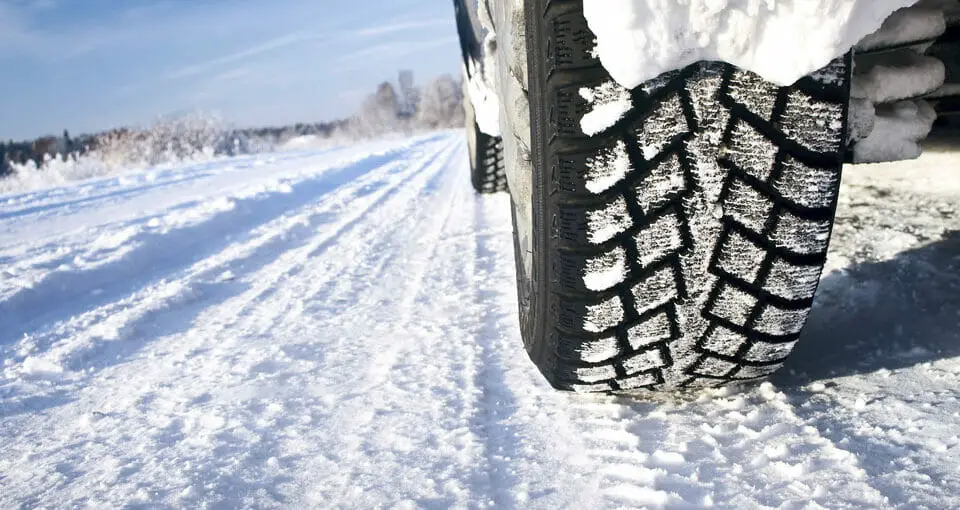
In many states, it is now law to have snow tires on your vehicle if you plan on driving in the winter. Snow tires are designed to give your car or truck better traction in the snow and ice. They typically have deeper treads than regular tires and are made from a softer rubber compound that helps them grip the road better.
If you live in an area that gets a lot of snow, it’s a good idea to invest in a set of snow tires.
Are you required to have snow tires in your state? If so, when do they need to be on your vehicle?In many states, including Michigan, New Hampshire, and Pennsylvania, it is required by law to have snow tires on your vehicle during certain times of the year.
Typically, these dates range from mid-October to mid-April.There are a few different types of snow tires available: all-season tires, studded winter tires, and non-studded winter tires. All-season tires are not necessarily made for snowy or icy conditions; however, they can provide some traction in light snowfall.
Studded winter tires are designed specifically for grip on ice and packed snow. They have metal studs embedded in the tread that offer extra traction. Non-studded winter tires also provide good grip on ice and packed snow, but don’t have the metal studs.
If you live in an area that gets a lot of snowfall or has very icy conditions during the winter months, it’s important to make sure you have the right type of tire for those conditions. Driving without proper Snow Tires can be extremely dangerous and is against the law in most states.
Credit: www.lesschwab.com
What Qualifies As a Snow Tire?
In order for a tire to be considered a snow tire, it must meet certain criteria. Firstly, the tire must have a tread depth of at least 6/32 of an inch. This ensures that the tire will have enough grip on snowy and icy surfaces.
Secondly, the tire must be made from a rubber compound that remains flexible in cold temperatures. This helps the tire to maintain its grip on cold surfaces. Finally, the tire must be labeled as a “snow” or “winter” tire by the manufacturer.
There are many different types of tires on the market that claim to be snow tires, but not all of them meet the above criteria. Some tires are designed for use in specific conditions, such as mud or sand, and are not suitable for use in snow and ice. Other tires may have a tread depth that meets the minimum requirements but are not made from a rubber compound that remains flexible in cold temperatures.
These tires may perform well in other conditions but will not provide adequate traction on icy or snowy surfaces.When shopping for snow tires, it is important to read the fine print and make sure that the tires you select meet all of the qualifications listed above.
Can You Use Normal Tires in Snow?
Most people don’t think twice about using their regular tires in the snow, but is that really the best idea? Tires are designed with different tread patterns to provide better traction on different surfaces. Snow tires have a deeper tread pattern with bigger gaps that help to grip the snow and ice.
They also have a special compound that helps to keep them from hardening in cold temperatures. Regular tires just don’t have these features, so they aren’t as effective in snowy or icy conditions. If you live in an area where it snows frequently, it’s worth investing in a set of snow tires.
You’ll be glad you did when you’re safely cruising down the road while everyone else is sliding around!
Do You Need Special Tires to Drive in the Snow?
No, you don’t need special tires to drive in the snow. However, it is recommended that you have winter tires on your vehicle for optimal safety and performance. Winter tires are designed to provide better traction, handling and braking in cold weather conditions.
They are made from a softer compound that remains pliable in colder temperatures, which helps grip the road surface.
What is the Law for Winter Tires in Bc?
In BC, it is the law that all vehicles must have winter tires between October 1 and April 30. Winter tires must be rated for snow and ice and have the mountain/snowflake symbol on them. All-season tires are not considered winter tires.
studded winter tires are also allowed in BC but only from October 1 to March 31.Drivers who do not switch to winter tires may be fined $109 and 3 driver penalty points will be added to their record if they are pulled over by police.
Winter tires VS All Season Tires. Proof that you need WINTER TIRES!!
Snow Tires
Most car owners know that snow tires are a must-have for driving in winter weather. But did you know that there are different types of snow tires? And that not all snow tires are created equal?
There are two main types of snow tires: studded and studless. Studded snow tires have metal studs embedded in the tread, which provide extra traction on icy roads. Studless snow tires, on the other hand, use a special compound to grip the road in slippery conditions.
So which type of tire is better? It really depends on your driving habits and the conditions you typically encounter. If you live in an area with lots of ice and freezing temperatures, studded tires may be a good option.
But if you don’t deal with those conditions often, studless tires may be just fine.Of course, no matter what type of tire you choose, it’s important to make sure they’re properly inflated and have enough tread for winter driving. And always remember to drive safely and take it slow when the roads are slick!
Snow Tires Vs Chains
If you live in an area where it snows, you know that snow tires are a must. But what about chains? Do you really need them, or are they just a waste of money?
Here’s a look at the pros and cons of each option to help you decide which is best for your needs.Snow TiresPros:
– Snow tires provide better traction than regular tires, so you’re less likely to slip and slide on icy roads.– They also tend to be more durable than regular tires, so they can last longer if you do a lot of driving in winter conditions.Cons:
– Snow tires can be expensive, especially if you need to buy new ones every year. They also add extra weight to your car, which can decrease fuel efficiency. And if you don’t use them all winter long, they can develop flat spots from sitting too long.
Studded Snow Tires Laws by State
In most states, it is legal to drive with studded snow tires from October 15 through May 1. Some states have different dates, so be sure to check the law in your state. In some states, you can only use studded snow tires on certain types of vehicles, such as four-wheel drive vehicles or vehicles with all-wheel drive.
In other states, there are no restrictions on which vehicle you can use studded snow tires.Studded snow tires provide better traction on icy and snowy roads than regular tires do. They can help you avoid getting into an accident by giving you better control of your vehicle.
However, they also wear down pavement more than regular tires do. This can create potholes and other problems for road crews trying to keep roads clear during the winter months.If you plan on driving with studded snow tires this winter, make sure you know the laws in your state so that you don’t get a ticket.
And be mindful of the impact that these tires have on the roads so that we can all enjoy safe travels this winter season!
Snow Tires in Summer
As the temperatures start to heat up, you might be wondering if it’s really necessary to change out your snow tires for summer ones. After all, they both have treads, right? While it’s true that both kinds of tires have treads, there are actually quite a few differences between them that make one better suited for cold weather and the other better suited for warm weather.
Snow tires are made from a different kind of rubber compound than summer tires. This rubber is designed to remain soft and pliable in cold temperatures, which helps provide traction on icy or snowy roads. The downside to this softer rubber is that it wears down more quickly in warmer temperatures and can even become “gummy”, making it less effective at gripping the road.
Summer tires also have a different tread pattern than snow tires. The deeper tread on snow tires helps displace slush and packed snow, while the shallower tread on summer tires provides better grip on dry pavement. Summer tires also typically have larger grooves between the tread blocks to help evacuate water from under the tire – something that’s important for preventing hydroplaning.
So, while you could technically get by with using your snow tires year-round, it’s not ideal. For optimal safety and performance, switch to summer (or all-season) tires when the weather starts to warm up!
Conclusion
When the weather outside is frightful, the best way to stay safe on the roads is to make sure your vehicle is equipped with snow tires. But what exactly are snow tires and do you really need them? Here’s everything you need to know about snow tire requirements.
Snow tires are designed to provide better traction in snowy and icy conditions. They typically have a deeper tread than regular tires and may be made of a softer compound that stays pliable in cold temperatures. While all-season tires will get you through most winter weather, if you live in an area with heavy snowfall, it’s a good idea to invest in a set of snow tires.
There are no hard and fast rules about when to put snow tires on your car, but as a general rule of thumb, they should be installed when the temperature consistently falls below 45 degrees Fahrenheit. Many tire manufacturers also recommend switching to winter tires when there’s more than an inch of accumulated snow on the ground.If you’re not sure whether or not your car needs snow tires, consult your owner’s manual or ask your mechanic for advice.
How Much Does It Cost to Install Motorcycle Tires
If you’re a motorcycle owner, you know that one of the most important parts of maintaining your bike is keeping the tires in good condition. But how much does it cost to install new motorcycle tires? The answer may surprise you – it can range from as little as $30 to over $100, depending on the type of tire and where you have it installed.
Here’s a breakdown of the average costs of installing new tires on your motorcycle.
How Much Do Motorcycle Tires Cost
Motorcycle tires are an important part of your bike, and they can be expensive. The cost of installing motorcycle tires can vary depending on the type of tire you need and the size of your bike. You should also factor in the cost of shipping when you are buying motorcycle tires.
If you are looking for new motorcycle tires, it is important to shop around and compare prices. There are many online retailers that sell motorcycle tires, so you should be able to find a good deal. Make sure to read the reviews before purchasing any tires, so you know what to expect.
When it comes to installing motorcycle tires, there are a few things you need to keep in mind. First, make sure that the wheels are properly aligned before putting on the new tires. This will help ensure that your bike rides smoothly and doesn’t pull to one side or another.
Next, follow the instructions that come with your new set of motorcycle tires carefully. If you’re not comfortable doing this yourself, take it to a professional mechanic. They will know exactly how to install your new motorcycle tires correctly.
Finally, remember to inflate your new motorcycle tires according to the manufacturer’s recommendations before heading out on the road!
Motorcycle Tire Mounting And Balancing Prices
The average price for motorcycle tire mounting and balancing is $30-$40. The cost will vary depending on the type of bike you have, the size of your tires, and whether or not you need new tires.If you have a small bike with standard sized tires, it will likely cost less than $30.
If you have a larger bike or specialty sized tires, the cost will be closer to $40.There are many things that affect how much it costs to mount and balance your motorcycle tires. The type of bike you have is one factor.
Smaller bikes typically have smaller wheels which means fewer spokes and less weight overall. This makes them less expensive to work on. Larger bikes tend to have more complex wheel designs which can make them more difficult (and therefore more expensive) to work on.
The size of your tires is another factor that affects the price of mounting and balancing them. Smaller tires are easier to handle and require less time to work on than larger ones. Specialty sizes may fall somewhere in between these two extremes in terms of difficulty (and cost).
Finally, if you need new tires along with having your old ones mounted and balanced, this will obviously add to the total cost.
Motorcycle Tire Installation near Me
If you’re a motorcycle owner, chances are you’ve had to deal with a flat tire at some point. If you’re lucky, it’s happened while you were parked at home and you were able to simply change the tire yourself. But if you’re not so lucky, you may have found yourself stranded on the side of the road with a flat tire and no idea how to change it.
If that’s ever happened to you, or if you just want to be prepared for the future, we’ve got some tips on finding motorcycle tire installation near me. Whether you need someone to come to your location and change the tire for you, or whether there’s a nearby shop that can do it, we’ll help you find what you’re looking for.The first thing to do is search online for motorcycle shops in your area.
Google Maps is a great resource for this, as it will show reviews and contact information for each business. Once you’ve found a few potential places, give them a call and ask about their tire changing services. Most shops should be able to accommodate your request without any problem.
If there aren’t any motorcycle shops near me that offer this service, another option is to look for mobile mechanics in your area. These are businesses that will come to your location and take care of the issue right then and there. Again, Google Maps is a great tool for finding these businesses, as well as reading reviews from other customers.
Once you’ve found someone who can help, be sure to have all the necessary tools on hand so they can get the job done quickly and efficiently. This includes things like a jack stand (if needed), gloves, and any other tools specific to changing tires on motorcycles. Having everything ready ahead of time will make the process go much smoother.
We hope this has helped give you some direction on where to find motorcycle tire installation near me when needed!
Average Cost for Motorcycle Tires
If you’ve ever wondered how much it costs to replace motorcycle tires, wonder no more! We’ve got the scoop on average prices for popular tire sizes.For a mid-size motorcycle like a Honda CBR500R, you can expect to pay around $150 per tire.
For a larger bike like a Harley-Davidson Road King, prices start at about $300 per tire. And for a high-performance race bike like a Suzuki GSX-R1000, tires can cost upwards of $500 each!Of course, these are just general guidelines – actual prices will vary depending on the brand and type of tire you choose.
But one thing is for sure: whether you’re looking for economy or performance, new motorcycle tires are an important investment. So be sure to do your research and pick the right set for your ride!
Does Walmart Change Motorcycle Tires
Walmart is one of the most popular places to buy motorcycle tires. But does Walmart change motorcycle tires?The answer is yes, Walmart changes motorcycle tires.
They have a special section in their auto care center that is dedicated to changing motorcycle tires. You can either bring your own tire or purchase one from Walmart.If you are planning on changing your own tire, Walmart has all the tools and supplies you need.
They also have a air compressor so you can inflate your new tire.
Cost to Mount And Balance Harley Tires
Harley-Davidson motorcycles require special care when it comes to tires. The cost to mount and balance Harley tires can be a bit higher than for other types of motorcycles, but it is worth it to keep your bike running smoothly. Here is a look at what you can expect to pay to have your Harley tires mounted and balanced:
The average cost to have your Harley tires mounted and balanced by a professional is $100-$120. This includes the labor costs for removing the old tires, mounting the new ones, and balancing them. It also includes the cost of any new parts or materials that may be needed, such as new valve stems.
If you need new tire pressure sensors installed, this will add an additional $40-$50 to the total cost.Of course, you can always save money by doing the work yourself. However, unless you have experience with motorcycle tires, we recommend leaving this job to the professionals.
Not only do they have the right tools and equipment for the job, but they also know how to properly adjust the tire pressure and balance the wheels – two things that are critical for safe riding on a Harley-Davidson.

Credit: www.revzilla.com
How Much Does It Cost to Have Tires Installed on a Motorcycle?
It costs between $30 and $50 to have a tire installed on a motorcycle, depending on the type of motorcycle and the size of the tire. The average cost for a single tire installation is about $45.
How Much Does It Cost to Install And Balance Motorcycle Tires?
Installing and balancing motorcycle tires is not as difficult or expensive as many people think. In fact, with a little time and effort, it can be done right at home with just a few tools. Here’s a quick overview of what you’ll need and how to get the job done:
Tools Needed:-Tire iron
-Socket wrench
-Torque wrench
-Balancing stand or weights
-Tape measure or ruler
-Pencil or marker
-Soapy water (optional)Instructions:
1. First, use the tire iron to loosen the lug nuts on the rear wheel. You don’t need to remove them completely, just break them loose so they can be removed by hand later. If your bike has a centerstand, this will make things easier.
Otherwise, you may need someone to help hold the bike steady while you work.2. Next, use the socket wrench to remove the axle nut (or bolts). Again, you don’t need to completely remove it/them – just break it/them loose so it/they can be removed by hand later.
3. With the axle nut(s) loosened, you should now be able to pull the wheel off of the bike. If there is any resistance, double check that the axle nut(s) are truly loose before proceeding – otherwise you could damage something.4a. If your new tire has a tube in it (as opposed to being tubeless), this is where things get a little more complicated – but not much! Start by removing any retaining clips or bands that are holding the old tube in place (if applicable). Then carefully peel back one side of the tire so that you can access the tube without damaging it too much. Once you have access, deflate the tube completely and then gently pull it out through the hole in The side of The tire . Take your time doing this so that you don’t accidentally puncture The new tube .4b.(If your new tire IS tubeless) Simply remove any retaining clips or bands holding The old tire in place ,deflate The tire completely ,and then gently pull it off The rim .Take care not damage The rim when doing this .You may want to lightly sand down any rough spots onThe rimbefore proceedingto step 5 .
Can I Change Motorcycle Tires Myself?
Many people ask if it is possible to change motorcycle tires themselves. The answer is yes, but it is not as easy as it may seem. There are a few things that need to be taken into account before attempting this task.
The first thing you need to do is make sure that you have the right tools for the job. You will need a jack, a wrench, and a tire iron. You will also need some form of protection from the elements, such as gloves and eye protection.
It is also important to have a plan in place in case something goes wrong.Once you have all of the necessary tools, you need to find a level spot on which to work. The next step is to loosen the bolts on the wheel using the wrench.
Once they are loose, you can remove the wheel by hand or with the help of the jack.With the wheel removed, you can now access the tire. Using the tire iron, pry off the old tire from the rim.
Be careful not to damage either one in the process.
Does Discount Tire Install Motorcycle Tires?
Discount Tire does install motorcycle tires! We carry a wide range of sizes and brands to fit most makes and models of motorcycles, and our experts can help you choose the right tire for your bike and riding style. Whether you’re looking for high-performance tires for the track or more durable options for street riding, we have you covered.
Plus, we offer installation services at all of our locations across the country. So if you need new motorcycle tires, Discount Tire is the place to go!
Conclusion
How Much Does It Cost to Install Motorcycle Tires?It can cost anywhere from $30 to $100 or more to have motorcycle tires installed, depending on the type of bike you have and where you take it to get the work done. If you have a sportbike, for example, expect to pay on the high end of that range.
And if you go to a dealer rather than an independent shop, you may be looking at an even higher bill.
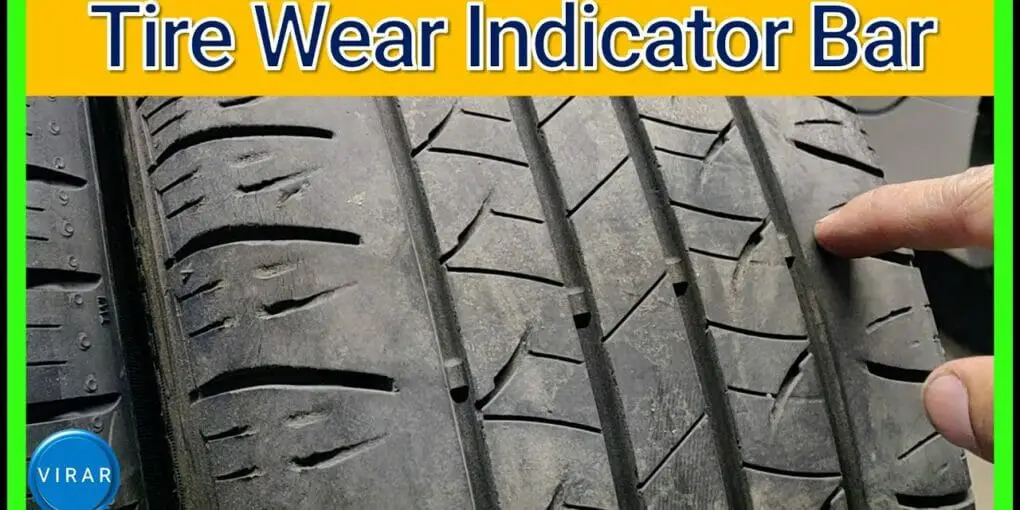
What Depth are Tread Wear Indicators
Tread wear indicators are designed to let you know when your tires need to be replaced. They are usually located in the grooves of the tire tread and are raised slightly above the surface of the tread. When the tread wears down to the level of the indicator, it’s time to replace the tire.
Most car tires have tread wear indicators. These are small raised areas in the tread that show how much tread is left on the tire. The depth of these indicators varies by manufacturer, but they are generally around 2/32″ deep.
When the tread wears down to this level, it’s time to replace the tire.

Credit: www.goodyear.com
What Depth are Tread Wear Bars?
Tread wear bars are designed to give motorists an indication of when their tires need to be replaced. The depth of the tread wear bars is 4/32 of an inch. When the tire’s tread depth reaches this point, it is time to replace the tire.
How Many Mm is the Tread Wear Indicator?
The tread wear indicator is a raised portion of the tread that runs perpendicular to the direction of travel. It is typically about 2/32″ (1.6 mm) high, and its purpose is to let the driver know when the tire has worn down to the point where it needs to be replaced. The indicator is not an exact measure of remaining tread depth, but it’s a good starting point for knowing when to start shopping for new tires.
What Do Tread Wear Indicators Look Like?
Tread wear indicators are small raised areas located in the bottom of the tread grooves. As the tire wears, these indicators will become more pronounced and eventually level with the rest of the tread surface. Once they reach this point, it’s time to replace the tire.
Do I Need to Replace Tires at 4 32?
No, you don’t need to replace your tires at 4/32. However, it’s something you should keep an eye on and consider replacing them sooner rather than later. The reason being is that once a tire gets down to 4/32 tread depth, it’s considered to be at the legal minimum tread depth in most states.
This means that it won’t take much for the tire to become bald and start slipping on wet roads. So, while you don’t need to replace your tires at 4/32, it’s definitely something you should keep an eye on and consider replacing them sooner rather than later.
What Depth Are Tread Wear Indicators?
Tread Wear Indicator Meaning
Tread wear indicator meaning is something that every driver should be aware of. Tread wear indicators are small raised areas located in the tread grooves of a tire. As the tire wears down, these indicators become more visible and let the driver know it is time to replace the tire.
There are two types of tread wear indicators- those made of rubber and those made of metal. Rubber tread wear indicators are found on most passenger car tires. They are relatively easy to spot because they protrude from the surface of the tire more than metal ones do.
Metal tread wear indicators, on the other hand, can be more difficult to see because they flush with the surface of the tire. Regardless of which type you have, both perform the same function- letting you know when it is time for new tires.How quickly a tread wear indicator becomes visible depends on how fast your tires are wearing down.
This, in turn, is affected by numerous factors such as driving habits, road conditions, vehicle weight, inflation levels, and alignment issues. Typically, though, you can expect a rubber tread wear indicator to become visible after about 25% tread life remaining and a metal one after 50% tread life remaining.Once you start seeing a tread wear indicator, it means your tires have reached or are approaching their end-of-life point.
At this point, traction capabilities are significantly reduced which can lead to decreased handling and braking ability as well as increased risk for hydroplaning and blowouts (especially at high speeds). In short: driving on worn out tires is dangerous so don’t do it!
Driving on Wear Bars
If you’ve ever driven on a paved road, you’ve likely seen the flat, smooth strips of pavement at the edge of the road. These are called wear bars, and they’re an important part of keeping drivers safe.Wear bars are designed to show when a tire is no longer providing adequate traction.
When a tire reaches the point where it is worn down to the wear bar, it needs to be replaced.Driving on a tire that has reached the wear bar can be dangerous because it can cause the tire to fail. This can lead to a blowout or loss of control of the vehicle.
It’s important to check your tires regularly to ensure that they have not reached the wear bar. If you see that one or more of your tires is getting close, it’s time for new tires. Don’t wait until it’s too late!
What is Tread Depth
Tread depth is the distance from the top of a tire’s tread to the bottom of its deepest groove. The deeper the tread, the more miles you can get out of your tires. Tires with shallow tread depths may need to be replaced more frequently.
To measure tread depth, use a tire tread depth gauge (available at most auto parts stores). Insert the gauge into the tread and push until it bottoms out. Read the number at the point where the gauge meets the tire.
This is your tread depth in 32nds of an inch.A new tire typically has a tread depth of 10/32” or 11/32”. A minimum safe tread depth is 4/32”.
If your tires are getting close to this, it’s time to start shopping for new ones.There are a few things you can do to extend the life of your tires and get more miles out of them:-Check your tire pressure regularly and keep them inflated to the recommended PSI.
Under-inflated tires wear down faster than properly inflated ones.-Rotate your tires every 5,000 miles or so. This evens out wear and tear and helps prevent premature balding in one spot on each tire.
-Get your alignment checked if you notice uneven wear patterns on your tires. Misaligned wheels will cause premature tire wear .
Safe Tire Tread Depth Mm
Most passenger vehicles have tire tread depth between 2/32″ and 10/32″. To check your vehicle’s tire tread depth, use a tread depth gauge. You can find these at most auto parts stores.
The minimum legal tread depth in most states is 2/32″, but it’s generally recommended that you replace your tires when they get down to 4/32″. That may seem like a small difference, but it can make a big difference in your safety on the road.Wet weather is when having adequate tire tread is most important.
When roads are wet, it takes longer for your tires to stop on wet pavement. Having less than 4/32″ of tread can increase your stopping distance by up to 25%. That means you could be putting yourself and others at risk by driving on tires that are too worn out.
If you’re not sure how to check your tire tread depth, ask a friend or take your car to a nearby service station or tire dealer and they’ll be happy to help you out. Keep in mind that it’s always best to err on the side of caution when it comes to safety, so if you’re ever in doubt about whether or not your tires need replacing, go ahead and get new ones. It could save your life!
Conclusion
Tread wear indicators are small raised areas of rubber located in the grooves of a tire’s tread pattern. They are designed to let drivers know when their tires have reached the minimum legal tread depth and need to be replaced. In most cases, tread wear indicators are located at the bottom of the deepest tread groove on each tire.
When all of the tread wear indicators on a tire are flush with the surrounding tread, it’s time to replace that tire.
Mud And Snow Tires Symbol
Mud and snow tires are a great addition to any car, truck, or SUV. They provide extra traction and stability in slippery conditions and can help you get through even the deepest mud puddles. But what do these tires really symbolize?
To some, they represent a sense of adventure and a willingness to take on anything Mother Nature throws your way. For others, they may be seen as a necessary evil, providing peace of mind during winter weather but adding an extra layer of hassle when it comes time to switch them out for summer tires. No matter what they mean to you, one thing is for sure – mud and snow tires are an important part of driving in Canada!
If you live in an area with lots of snow and mud, then you know how important it is to have the right tires for your vehicle. Mud and snow tires have a special tread pattern that helps to provide better traction in these conditions. They also tend to be made from a softer compound than regular tires, which helps them grip the road better.
While mud and snow tires are not required in all states, they can definitely make driving in these conditions much safer. If you do a lot of off-roading or live in an area where winter weather is severe, then mud and snow tires are a wise investment.
Credit: www.tranbc.ca
What Does Mud And Snow Tires Mean?
Mud and snow tires, also known as all-season or all-terrain tires, are designed to provide good traction and handling in a variety of driving conditions. They typically have deeper treads than regular passenger car tires, and may also have special features such as reinforced sidewalls and aggressive tread patterns.Mud and snow tires are a great option for drivers who live in areas with snowy or icy winters, but still want to be able to drive on dry roads the rest of the year.
They can also be a good choice for those who frequently drive off-road or on gravel roads. However, they are not necessarily the best tire for every driver or every situation.If you’re considering mud and snow tires for your vehicle, it’s important to know what they can and can’t do, as well as their pros and cons.
Keep reading to learn everything you need to know about mud and snow tires.
How Do You Know If Your Tires are Mud And Snow?
Tires are an important part of any vehicle, and it is important to know how to care for them. One type of tire that may need special care is a mud and snow tire. These tires are designed for use in colder weather and on slippery surfaces.
Here are some tips on how to tell if your tires are mud and snow:1. Look at the tread pattern: Mud and snow tires typically have a deeper tread than regular passenger car tires. This helps them grip the road better in slippery conditions.
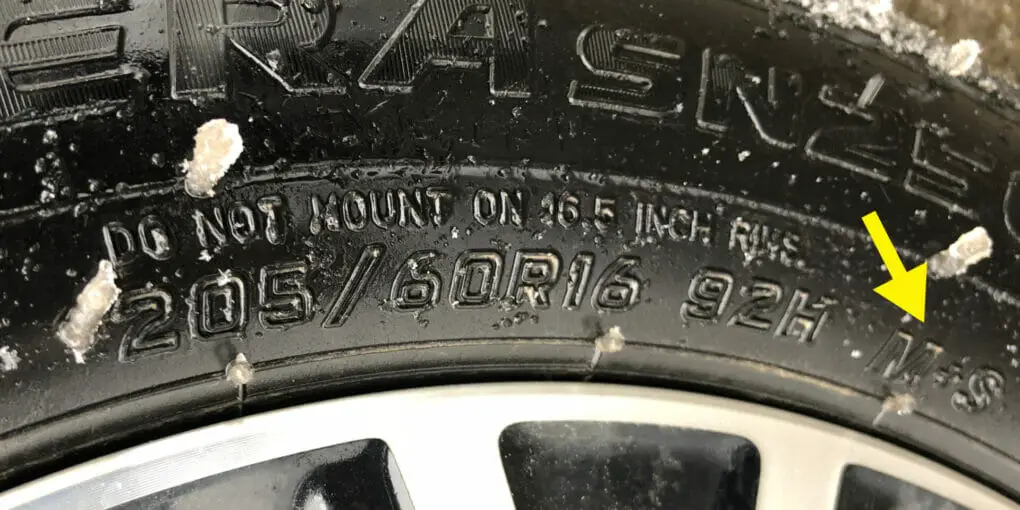
2. Check for the M+S symbol: Most mud and snow tires will have the M+S (mud and snow) symbol on the sidewall. This indicates that the tire meets certain standards for traction in these conditions.3. Ask your Tire Dealer: If you’re unsure whether or not your tires are mud and snow, ask your tire dealer or look in your vehicle’s owner’s manual.
What Symbol is on Snow Tires?
There are a few different symbols that may be on snow tires, depending on the brand and model of tire. The most common symbol is a mountain with a snowflake in the center, which indicates that the tire is designed for use in snowy conditions. Some other symbols that may be present on snow tires include a winter scene with trees and snowflakes, or simply the word “snow” written across the tire.
What Does M & S Mean on a Tire?
M & S on a tire stands for mud and snow. This type of tire is designed for use in both off-road and winter conditions. They typically have deeper treads than regular tires, and some even have studs or spikes to help with traction in icy or snowy conditions.
3-Peak Mountain Snowflake Tires
All-Season Tire Symbol
If you’re shopping for new tires, you may have noticed a little symbol on some of the options that says “all season.” But what does that mean? Here’s a quick rundown of all-season tires and what they can offer you.
All-season tires are designed to provide good traction and comfort in a variety of conditions, including dry pavement, wet pavement, and even light snow. They’re a great option for many drivers because they offer year-round performance without the need to switch to winter or summer tires.One thing to keep in mind is that all-season tires are not necessarily the best choice for every driver.
If you live in an area with very cold winters and lots of snow, winter tires will likely be a better option for you. But if you don’t want the hassle of changing your tires twice a year, all-season tires could be a good choice.No matter what kind of tire you choose, make sure to do your research and buy from a reputable brand.
And always follow the manufacturer’s recommendations for care and maintenance. With proper care, your new all-season tires should give you years of trouble-free driving!
Tire Symbols Meaning
Tire symbols are important to know because they provide information about the tire that can help you maintain it properly and keep it safe. The most common tire symbols are:-P: This stands for passenger car tires.
These tires are designed for use on passenger cars, vans, and light trucks. They usually have a speed rating of up to 100 mph.-LT: Light truck tires are designed for use on trucks, SUVs, and some vans.
They often have a load index that is higher than that of passenger car tires. LT tires also typically have a speed rating of up to 100 mph.-ST: Special trailer tires are designed specifically for use on trailers.
They have a load index and speed rating that is lower than that of other tires because they are not meant to be driven on the road.-ATV: All terrain vehicle tires are designed for use on ATVs and other off-road vehicles. They have an aggressive tread pattern that helps them grip in all types of conditions, but they should not be used on the highway.
Are Ms Tires All-Season
Ms Tires are All-SeasonIf you are looking for a tire that can handle any type of weather and road condition, then you need an all-season tire. Ms Tires offers a great selection of all-season tires that will keep you safe no matter where you go.
All-season tires are designed to provide good traction in wet and dry conditions, as well as in light snow. They are not however, meant for heavy snow or ice covered roads. If you live in an area with harsh winters, it is best to invest in a set of winter tires for your car.
Ms Tires has all-season tires for every type of vehicle, so you can be sure to find the perfect match for your car. And because they are all-season tires, you can use them year round without having to switch out your tires when the weather changes. This makes life a lot easier and saves you money in the long run.
How to Tell Winter Tires from All-Season
If you live in an area with cold winters and lots of snow, it’s important to have winter tires on your car. But how can you tell if a tire is a winter tire?Here are some things to look for:
1. Winter tires have a deeper tread than all-season tires. This helps them grip the road better in snow and ice.2. Winter tires are made from a different type of rubber compound that stays flexible in cold temperatures.
All-season tires get hard and brittle in the cold, which reduces their grip on the road.3. Winter tires often have special features like studs or grooves that help them grip icy roads better.4. You can usually find the words “winter” or “snow” on the sidewall of a winter tire.
Conclusion
In the world of off-roading, there are few things as iconic as mud and snow tires. These specialized tires are designed for use in extreme conditions, and their unique tread patterns set them apart from traditional road-going tires. For many off-roaders, mud and snow tires are a necessary part of their vehicle’s equipment, and they often choose to run these tires year-round regardless of the weather conditions.
While mud and snow tires may not be required for every off-road vehicle, they can make a big difference when the going gets tough.
Tire Sizes Explained Inches
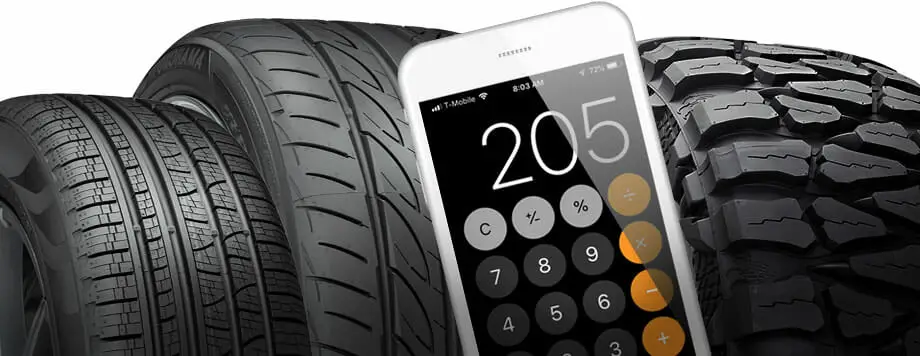
When it comes to tires, there are a lot of numbers to pay attention to. But probably the most important one is the tire size. Tire size is usually expressed in inches and can be found on the side of your tire.
It might look something like this: P215/65R15 89H. If you’re not used to reading tires, all those letters and numbers can be pretty confusing. So let’s break it down.
How to Read a Tire Size & Understanding a Tire Sidewall – ABTL Auto Extras
When it comes to tires, there are a lot of numbers thrown around – width, aspect ratio, diameter… It can be tough to keep track of what all of these numbers mean. But don’t worry, we’re here to help!One of the most important tire specs is the width.
Tire width is measured in millimeters (mm), and generally falls between 195 mm and 305 mm. The wider the tire, the better the grip and stability – but too wide can lead to decreased handling.Aspect ratio is another key spec.
This is the height of the sidewall expressed as a percentage of the width. For example, an “80 series” tire has a sidewall that is 80% as tall as it is wide. A taller sidewall will give you a smoother ride, but a shorter sidewall will improve handling and braking response.
Finally, we have diameter. This is simply the measurement from one edge of the tire to the other at its widest point – and it’s expressed in inches. Most passenger vehicles have tires with diameters between 14 and 22 inches.
Keep these three things in mind next time you’re shopping for new tires and you’ll be sure to find something that fits your driving needs perfectly!
Tire Size Calculator
When it comes to buying new tires, one of the most important factors to consider is the size. There are a variety of tire sizes available on the market, and each one has its own advantages and disadvantages. So how do you know which size tire is right for your vehicle?
One way to narrow down your choices is to use a tire size calculator. This handy tool takes into account a number of different factors, such as the make and model of your vehicle, your driving habits, and even the terrain you’ll be driving on. Based on this information, it will recommend a few different tire sizes that would be a good fit for your car.
Of course, you don’t have to strictly follow the calculator’s recommendations. If you have your heart set on a certain type or brand of tire, you can always adjust the sizing accordingly. But if you’re not sure where to start, using a tire size calculator is a great way to get some ideas.
Tire Size Comparison Chart
If you’re in the market for new tires, you may be wondering what size to choose. There are a few things to consider when making your decision, including the type of vehicle you drive and your personal driving preferences. To help you make an informed decision, we’ve put together a tire size comparison chart.
First, let’s look at the different types of tires available:All-season tires are designed for year-round use and provide good traction in both wet and dry conditions. They’re a good choice for most drivers.
Summer tires are designed for warm weather use and provide excellent traction on dry roads. They don’t perform as well in wet or cold conditions, however.Performance tires are designed for high-speed driving and provide good traction on both dry and wet roads.
They usually have a lower profile than other types of tires, which can improve handling but also makes them more susceptible to damage from potholes and curbs.Now that you know the different types of tires available, let’s compare their sizes:Tire Type Width Aspect Ratio Diameter All-Season P215/60R16 95H 26 inches Summer 225/45R17 94W 25 inches Performance 245/40ZR18 92Y 24 inches As you can see, all-season tires are the widest of the three options listed here, while performance tires have the tallest sidewalls.
Summer tires fall somewhere in between. When it comes to choosing a tire size, there are a few things to keep in mind: First, wider tyres will give you more stability on the road but may cause your car to feel less responsive during quick turns. Taller tyres may improve comfort but can make your car feel less stable at high speeds.
Second, remember that bigger isn’t always better – especially when it comes to wheels! Larger wheels may look great but they can also be more expensive and difficult to find replacement parts for if something goes wrong. Third, think about how you use your car most often – if you do a lot of city driving then smaller wheels may be fine, but if you frequently take long highway trips then larger wheels might be a better option since they’ll help smooth out any bumps in the road.
Ultimately, it’s up to you to decide what size tyre is right for your car and driving needs! We hope this comparison chart has been helpful – happy shopping!
Changing Tire Size on Same Rim
If you’re looking to change your tire size on the same rim, there are a few things you need to know. First, you need to make sure that the new tires you’re planning on using are the same width as your current ones. Second, you’ll need to adjust your air pressure accordingly.
Third, and finally, you’ll need to check your speedometer calibration.Assuming all of those things check out, then you should be good to go! Changing tire size on the same rim is a pretty simple process and can be done in just a few minutes.
How to Read Tire Size
When you’re shopping for new tires, you’ll need to know how to read tire size so that you can find the right ones for your car. Tire size is made up of a few different numbers and letters that tell you the width, height, diameter, and other important information about the tire.The first number in tire size is the width of the tire in millimeters.
The second number is the aspect ratio, which is the height of the tire sidewall as a percentage of the width. The third number is the wheel diameter in inches. And finally, there will be a letter or two at the end that indicates speed and load ratings.
Now that you know how to read tire size, you can start shopping for new tires that will fit your car perfectly!
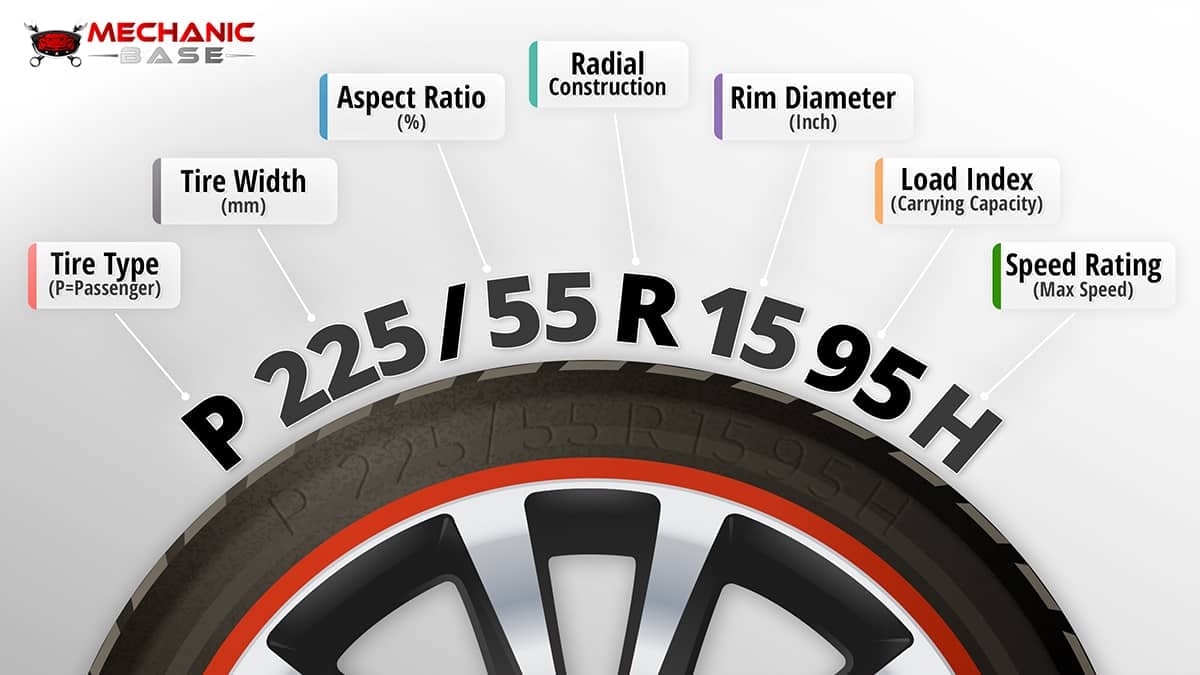
Credit: mechanicbase.com
What Does the 265 70R17 Mean?
The 265 70R17 is a tire size designation. The 265 is the width of the tire in millimeters. The 70 is the aspect ratio, which is the sidewall height as a percentage of the width.
In this case, it would be 70% of 265 mm, or 185 mm. The R stands for radial construction, and 17 is the wheel diameter in inches.
What Do Tire Sizes Mean in Inches?
Tire sizes are a bit confusing, but they really just indicate the width of the tire in millimeters. The first number is the width of the tire from sidewall to sidewall. The second number is the diameter of the wheel that it will fit on.
For example, a 225/50 tire will fit on a wheel with a 50mm offset and have a sidewall that is 225mm wide.
What Do Tire Sizes Numbers Mean?
Tire sizes can be a bit confusing, but understanding what the numbers mean can help you choose the right tires for your car. The number on the tire is actually made up of several different parts.The first part is the width of the tire in millimeters.
This is followed by a slash and then the diameter of the tire in inches. So, for example, a 225/60R16 tire would be 225 mm wide and 60 inches in diameter. The R indicates that it’s a radial tire, while the 16 indicates that it’s meant for a 16-inch wheel.
The width of the tire is important because it needs to match up with the width of your wheel wells. You don’t want to put too narrow or too wide of tires on your car – both can lead to problems. The diameter is also important, as you need to make sure that your new tires will fit over your old ones and that they won’t rub against anything on your car when you turn.
Now that you know what all those numbers mean, you’re one step closer to choosing the perfect tires for your car!
How Do You Read Tire Sizes?
Tire sizes can be confusing, but they provide important information about a tire. The size is made up of a series of numbers and letters that tell you the width, height, diameter, load capacity and speed rating of the tire. Here’s a quick guide to help you read tire sizes.
The width is the first number in the size code and it tells you how wide the tire is in millimeters. The second number is the height, which tells you the sidewall height as a percentage of the width. The diameter is the next number and it tells you the size of wheel that the tire will fit on in inches.
The load capacity is indicated by a letter following the diameter and it tells you how much weight the tire can carry. Finally,the speed rating is indicated by a letter at the end of the size code and it tells you how fast you can go on that tire.Now that you know how to read them, take a look at your tires and see what information they’re giving you!
Conclusion
Most people know that a tire’s size is represented by a series of numbers and letters, but not everyone knows what those numbers and letters mean. Here’s a quick guide to understanding tire sizes.The first number in a tire size is the width of the tire in millimeters.
The second number is the height of the sidewall, or aspect ratio. The third number is the diameter of the wheel in inches. The fourth number is the load index, or how much weight the tire can safely carry.
The fifth letter is the speed rating, or how fast you can go on that tire.Knowing your tires’ size can help you when shopping for new tires or when trying to figure out why your car isn’t riding as smoothly as it should be. If you have any questions about Tire Sizes Explained Inches , feel free to ask a certified mechanic – they’ll be happy to help!
Good Snow Tires for Cars
If you live in an area with a lot of snow, it’s important to have good snow tires on your car. Snow tires are designed to provide better traction in snow and ice than regular tires. They can make a big difference in your ability to get around in winter weather.
When shopping for snow tires, look for ones that are rated for the type of driving you’ll be doing. If you do a lot of highway driving, you’ll want a different tire than if you mostly drive on city streets. Also, consider the size and weight of your vehicle when choosing tires.
Heavier vehicles need stronger tires that can handle the extra weight.
If you live in an area with a lot of snow, it’s important to have good snow tires on your car. Snow tires are designed to provide better traction in snow and ice than regular tires. They typically have deeper treads and softer rubber compounds that help grip the road surface.
There are a few things to keep in mind when shopping for snow tires. First, make sure you get the right size for your car. Second, consider the type of driving you’ll be doing.
If you’ll be mostly driving on highways, you’ll want a tire with good highway traction. Third, think about the climate where you live. If it’s very cold where you live, you might want a tire that’s designed for extreme cold weather conditions.
Finally, don’t forget to budget for the cost of new tires. Snow tires can be expensive, so it’s important to shop around and compare prices before making a purchase.
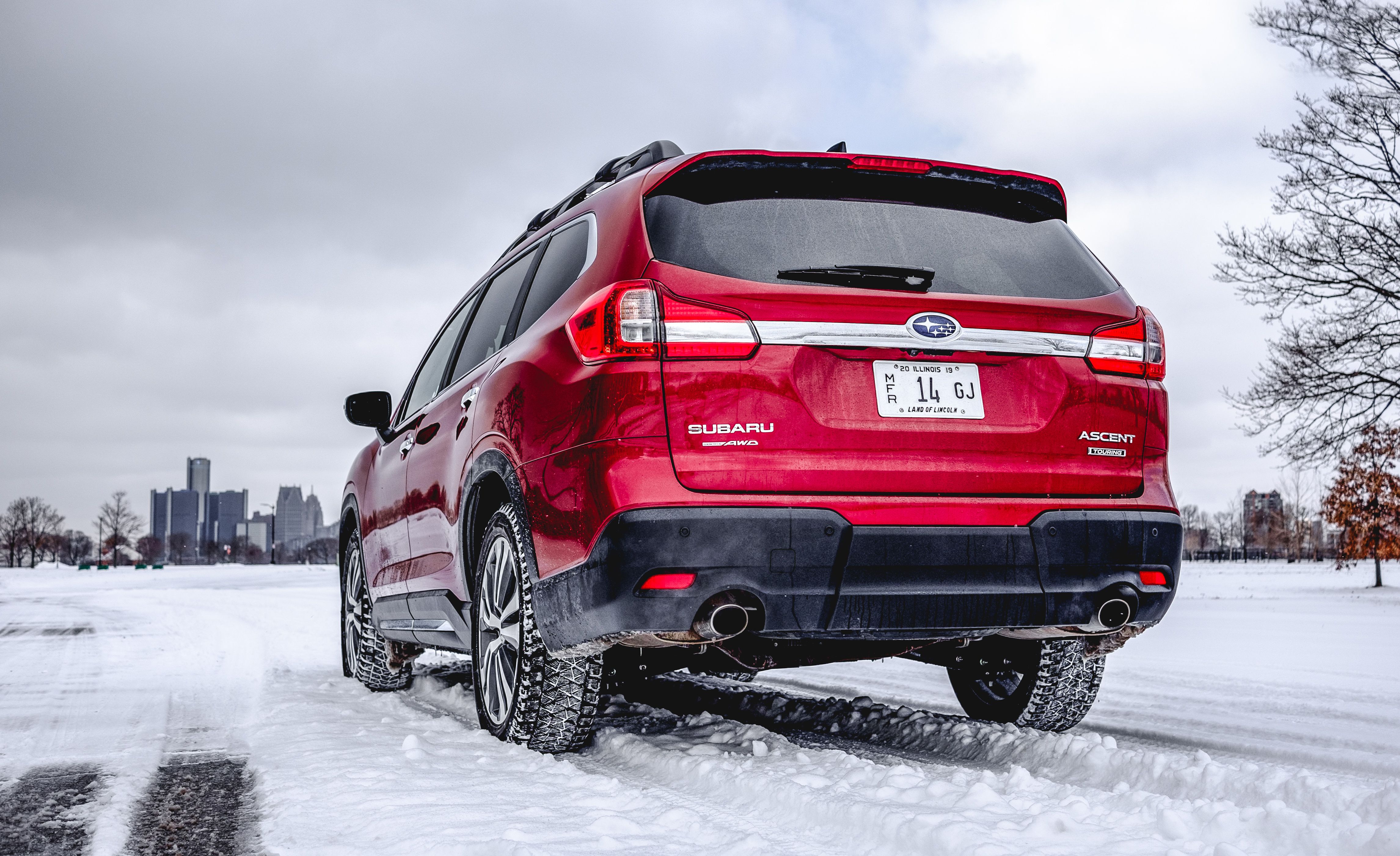
Credit: www.caranddriver.com
What is the Best Winter Tire for My Car?
There is no definitive answer to this question as it depends on a number of factors, such as the make and model of your car, where you live and drive, and your personal preferences. However, we can give you some general tips to help you choose the best winter tires for your car.If you live in an area with cold winters and lots of snow, then you’ll want tires that are designed for those conditions.
That means tires with deep treads for traction in the snow, and possibly studs for even better grip on icy roads. Some good choices here would be the Michelin X-Ice Xi3 or the Bridgestone Blizzak WS80.If you don’t have to deal with much snow but do get freezing temperatures regularly, then all-season tires are probably a better option for you.
These provide good grip in both dry and wet conditions, while still being able to handle occasional light snowfall. The Continental CrossContact LX25 or Pirelli Scorpion Verde All Season are two great choices in this category.Ultimately, it’s up to you to decide what type of tire is best for your car based on your specific needs and driving conditions.
If you’re not sure, ask a professional at your local tire shop or dealership for their advice before making a purchase.
Should I Put 2 Or 4 Snow Tires on My Car?
If you live in an area where it snows frequently, you may be wondering how many snow tires you should put on your car. The answer depends on a few factors, including the type of vehicle you have and the conditions of the roads.Generally speaking, most experts recommend putting four snow tires on your car if possible.
This will give you the best traction and control, especially if you find yourself driving in icy or snowy conditions often.There are a few exceptions to this rule, however. If you have a rear-wheel drive car, for example, putting four snow tires on all wheels can actually do more harm than good.
In this case, it’s better to just put two snow tires on the front wheels to help with traction while leaving the back wheels free for steering.Of course, ultimately the decision of how many snow tires to put on your car is up to you. Just be sure to keep safety in mind and consult with an expert if you’re unsure about what’s best for your situation.
Do Snow Tires Make a Difference on a Car?
When it comes to driving in winter weather, snow tires can make a big difference. They provide extra traction and grip on icy or snowy roads, helping you stay in control of your car. While all-season tires are designed to handle some winter driving, they don’t offer the same level of performance as snow tires.
If you regularly drive in winter conditions, it’s worth investing in a set of snow tires for your car.
How Much are Decent Snow Tires?
There is no definitive answer to the question of how much decent snow tires cost. This is because there are many factors to consider when purchasing snow tires, such as the type of vehicle you have, the size of the tires, and the brand. However, we can give you some general guidance on what to expect when shopping for snow tires.
One factor that will affect the cost of your snow tires is the type of vehicle you drive. For example, if you have a small car or sedan, you can expect to pay less for your tires than someone who has a large SUV or truck. This is because smaller vehicles require smaller tires, which are typically less expensive than larger ones.
Another factor that will impact the price of your snow tires is the size of the tire. Again, smaller sizes will generally be cheaper than larger ones. However, it’s important to make sure that you get the right size tire for your vehicle.
If you purchase too small of a tire, it won’t provide adequate coverage and may not perform well in snowy conditions. On the other hand, if you buy too large of a tire, it could negatively impact your gas mileage and handling.Finally, another thing that will affect how much you spend on snow tires is the brand.
Some brands simply cost more than others. However, this doesn’t necessarily mean that they’re better quality – so don’t let price be your only determining factor when selecting a brand. Do some research to read reviews and compare prices before making your final decision.
In summary, there’s no simple answer to how much decent snow tires cost since there are several factors involved in pricing them.. With that said ,you can expect to pay anywhere from $50-$200 for a good quality set , depending on things like vehicle type ,size ,and brand .
9 of the BEST Winter / Snow Tires for 2021
Best Snow Tires for Suv
When it comes to choosing the best snow tires for your SUV, there are a few things you need to take into account. First, consider the type of terrain and weather conditions you’ll be driving in most often. If you live in an area with lots of hills and mountains, or if you’re frequently driving in heavy snowfall, you’ll want to make sure you choose tires that can handle those conditions well.
Second, think about the size and weight of your SUV. Heavier vehicles will need tires that can provide good traction and support, while lighter SUVs may do fine with less robust tires. Finally, factor in your budget – there’s no point in spending more than you have to on snow tires!
With all that said, here are our picks for the best snow tires for SUVs:1. The Michelin LTX A/T2 is a great choice for drivers who need a tire that can handle all kinds of terrain and weather conditions. It has excellent traction in both dry and wet conditions, as well as in light or heavy snowfall.
Additionally, it’s very durable and long-lasting, so you won’t have to replace your tires frequently. However, this tire is on the pricier side.2. The Hankook Dynapro ATM is another great option for drivers who need a versatile and reliable tire.
It has excellent traction on all types of terrain and performs well even in deep snowfall. Plus, it’s very affordable without sacrificing quality or performance. However, one downside is that it isn’t quite as durable as some other options on this list.
3./4./5./6./7..8../9../10..
.
Best All-Season Tires for Snow
Are you looking for the best all-season tires for snow? If so, you’ve come to the right place. In this blog post, we’ll take a look at some of the best all-season tires for snow, as well as some things to keep in mind when shopping for them.
First, let’s start with a quick overview of all-season tires. All-season tires are designed to provide good traction and handling in a variety of conditions, including wet roads, dry roads, and even light snow. However, they’re not necessarily the best option for heavy snow or ice.
If you live in an area that gets a lot of snow or if you often drive in icy conditions, you might want to consider winter tires instead of all-season tires. Winter tires are specifically designed for use in snowy and icy conditions and can provide better traction and handling than all-season tires.Now that we’ve covered the basics, let’s take a look at some of the best all-season tires for snow.
When shopping for all-season tires, there are a few things to keep in mind, including tread pattern, tire size, and speed rating.Tread pattern is important because it affects how well the tire will grip the road surface. A tire with a shallower tread depth is more likely to slip on wet or icy roads than a tire with deeper tread depths.
Look for all-season tires with deeper tread depths (10/32″ or 11/32″) if you plan on doing any driving in snowy or icy conditions.Tire size is also important when shopping for all-season tires because different sizes offer different levels of traction and handling. Generally speaking, wider and taller tires offer better traction than smaller ones.
So if you have the option to choose between two different sizes of all-season tire (e., 225/60R16 vs 235/70R16), go with the larger size if possible. Just be sure that your vehicle can accommodate the larger size before making your purchase!Finally, make sure to check the speed rating on any all- season tire you’re considering buying .
The speed rating tells you how fast the tire can safely travel under ideal conditions . A higher speed rating means that the tire can handle higher speeds without losing grip on the road surface .
Winter Tires
When the temperatures start to dip and the snow starts to fall, it’s time to switch out your regular tires for winter tires. Winter tires are designed specifically for cold weather and snowy conditions, and can make a big difference in your safety on the road. Here’s everything you need to know about winter tires.
What are winter tires?Winter tires are made from a softer rubber compound than regular tires, which helps them grip the road better in cold weather. They also have deeper treads than regular tires, which helps them clear snow and ice more effectively.
Winter tires typically have a symmetrical or asymmetrical tread pattern with large lateral grooves that help evacuate water, slush, and snow. Some even have studs that provide extra traction on icy roads.Why do you need winter tires?
While all-season tires are fine for most driving conditions, they’re not ideal for winter weather. The softer rubber compound of winter tires helps them maintain flexibility in cold temperatures, which is crucial for gripping the road. The deeper treads also give winter tiresthe ability to clear snow and ice more effectively, providing better traction on slippery roads.
And if you live in an area with frequent freezing temperatures and heavy snowfall, studded winter tiresshould be at the top of your list – the metal studs provide excellent traction on icy surfaces.
Whether you’re driving in light snow or braving a blizzard, having the right set of wheels makes all the difference. So if you haven’t already made the switch to winter tyres, now’s the time!
Michelin Snow Tires
Michelin Snow Tires are some of the best snow tires you can buy. They are made with a special compound that helps them grip the road better in cold weather and they also have deeper treads than most other tires, which helps them grip in deep snow. They are more expensive than other brands, but they are worth the money if you live in an area with lots of snow and ice.
Conclusion
If you’re looking for good snow tires for your car, there are a few things to keep in mind. First, you’ll want to make sure that the tires you choose are rated for winter driving. Second, you’ll want to pick a tire that’s appropriate for the type of vehicle you drive.
And finally, you’ll want to consider the cost of the tires before making your purchase. With those factors in mind, let’s take a look at some of the best snow tires for cars on the market today.
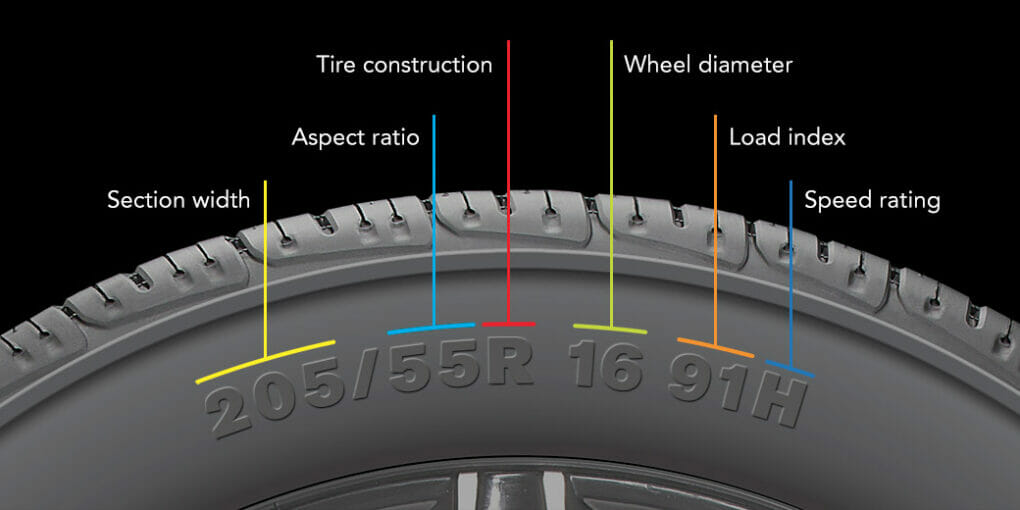
How to Work Out Tire Size
If you are looking to buy new tires, it is important to know the size of your current tires. You can find this information on the side of your tire. The numbers will look something like this: P215/65R15.
The first number is the width of the tire in millimeters, the second number is the aspect ratio, and the third number is the wheel diameter in inches. To calculate tire size, you need to know all three of these numbers.
How To Choose The Right Tire Size | Tire Sizing Guide
- Find the width of your tire
- This can be found on the sidewall of your tire
- Find the height of your tire
- Again, this can be found on the sidewall of your tire
- Divide the width by 25 to get the width in inches
- Multiply the width by 2 to get the diameter in inches 5
- Add 10% to the diameter to account for tread 6
- Convert from inches to millimeters
Tire Size Calculator
There are a few things to consider when you’re shopping for new tires. One is the size of the tire. The second is the width of the tire.
The third is the aspect ratio of the tire. And the fourth is the diameter of the wheel.The first thing you need to do is measure your current tires.
You can find this information on the sidewall of your tires. Once you have this information, you can begin shopping for new tires.When you know the size of the tire, you can narrow down your choices by Tire Size Calculator .
This will help you select tires that are compatible with your vehicle.Width and aspect ratio are important because they affect how wide or narrow your tires look on your car. Wider tires give your car a more aggressive look, while narrower tires create a more sleek appearance.
Aspect ratio affects how tall or short your tires look in relation to their width. Taller (higher) ratios make your car look lower to the ground, while shorter (lower) ratios give it a taller appearance.Diameter is important because it tells you what size wheels you need to purchase to fit these new tires onto your car.
How to Read Tire Sizes in Inches
One of the most important aspects of maintaining your car is keeping an eye on your tires. Not only do they play a crucial role in safety, but they also can impact your gas mileage and how smoothly your car rides. With that in mind, it’s important to know how to read tire sizes so you can keep an eye on their condition and replace them when necessary.
The first thing you need to know is that tire sizes are typically expressed in inches. This means that when you see a size like “205/55R16,” the first number (205) is the width of the tire in millimeters, while the second number (55) is the height or aspect ratio. The R simply indicates that it’s a radial tire, while the 16 refers to the diameter of the wheel in inches.
Generally speaking, wider tires provide better traction and stability, while taller tires offer a smoother ride. However, it’s important to consult your owner’s manual or a professional before making any changes to your tires, as different cars have different requirements.Once you’ve determined what size tires you need, it’s time to start shopping around!
Be sure to compare prices and reviews before making a purchase, and always make sure to get professionally installed by someone who knows what they’re doing. With proper care and maintenance, your tires should last for years – keeping you safe and comfortable on the road.
Changing Tire Size on Same Rim
You’ve bought new tires and you’re ready to install them, but you realize that the new tires are a different size than the old ones. What do you do? Can you put different sized tires on the same rim?
The short answer is yes, you can put different sized tires on the same rim. However, there are a few things to keep in mind before doing so.First, when changing tire sizes, it’s important to make sure that the new tires are compatible with your car.
Check your owner’s manual or consult with a professional to ensure that you’re choosing the right size tires for your vehicle.Second, keep in mind that changing tire sizes can affect your car’s performance. Different sized tires can change your car’s speedometer readings, handling, and gas mileage.
Be sure to test drive your car after installing new tires to get a feel for how it handles with the new size.Third, remember that not all rims are created equal. Some rims are designed specifically for certain tire sizes.
So if you’re unsure about whether or not your rim will work with a different sized tire, it’s best to check with a professional before making any changes.Changing tire sizes can be done safely if you take the time to do your research and understand how it will affect your car’s performance. Be sure to consult with experts if you have any questions or concerns before making any changes to ensure that everything goes smoothly.
Tire Size Explained
When it comes to shopping for new tires, one of the most important things to know is what size tire you need. But if you’re not familiar with tire sizing, it can be a bit confusing. Here’s a quick guide to help you understand tire sizes and what they mean.
The first thing to note is that there are two different types of tire sizes – metric and imperial. Metric sizes are used mostly in Europe, while imperial sizes are used in the United States. The good news is that both systems use the same basic information, so once you know how to read one, you can easily read the other.
Each tire size is made up of a series of numbers and letters that tell you everything you need to know about the tire. For example, a common passenger car tire might be listed as 205/55R16 91V. Let’s break down what each part of this code means:
205 – This is the width of the tire in millimeters. In this case, the width is 205mm or just over 8 inches.– This is the width of the tire in millimeters.
In this case, 55 – This number represents the height of the sidewall as a percentage of the width . In this example, 55% of 205mm would be 113mm (about 4 1/2 inches).– This number represents .
R16 – The “R” here stands for “radial,” which refers to how the layers of fabric in the tires are arranged . The 16 refers tothe diameterof th e wheel rim ,in inches ,that this particular size TireSize Explainedwill fit on . So this sidewall will fit ona wheel rimthatis 16inchesin diameter .
91V- Finally ,this last letter and number combination provides information aboutthe load ratingand speed ratingofthistire type . The load ratingis represented bya number from 70-130 and tellsyouhow much weightthe tir ecan safelycarry . The speed ratingis representedbyale tter from Ato ZwithAbeingthe lowestand Z beingthe highest .This particular tir ehas a load ratingof 91whichmeansitcan carryup tothesame amountas1 ,389 poundsand hasa speedratingof V whichmeansitcan travel at speedsup tow150 milesper hour safely .
Find My Tire Size by Vin Number
When it comes to finding your tire size, the best place to start is with your car’s VIN number. This 17-digit code is required by law to be present on every vehicle, and it can tell you a lot about your car – including what size tires it needs.To find your tire size using your VIN number, simply look up the VIN decoding chart for your specific make and model of vehicle.
Once you know what each digit in the VIN stands for, you can use that information to identify your tire size. For example, if the tenth digit in your VIN is “2”, that means your car takes P215/75R15 tires.If you don’t have access to a VIN decoding chart, or if you’re not sure how to read one, there are other ways to determine your tire size.
You can usually find this information on a placard inside the driver’s door panel or in the owner’s manual. If all else fails, you can always take off one of your wheels and measure the tires yourself.Once you know your car’s correct tire size, be sure to check out our selection of quality tires here at Tire Rack!

Credit: www.farmandfleet.com
What is the Standard Tire Size
When shopping for tires, you’ll notice that there are a lot of numbers and letters on the sidewall. These tire size markings give important information about the tire’s intended use, dimensions, load capacity and maximum speed. With so many variations out there, it can be difficult to know what all of these numbers and letters mean.
In this blog post, we’ll explain what the standard tire size is and how to read tire sizes so that you can choose the right tires for your vehicle.The standard tire size is measured in inches and corresponds to the width of the tire from sidewall to sidewall. The first number in the Tire Size Code is the width of your tire in millimeters followed by the “R” designation which stands for “radial.”
The second number in the code is known as the aspect ratio and it represents the height of your tire’s sidewall as a percentage of its width. For example, an aspect ratio of 50 would mean that your sidewall is 50% as tall as it is wide. The last number in the code is called the wheel diameter and it corresponds to the diameter of your wheel in inches.
Now that you know how to read a tire’s sizing code, let’s take a look at what some common Tire Size Codes mean:P215/60R16 – This is a Passenger Car Tire with a width of 215mm (8.5 inches), an aspect ratio of 60 (the sidewall height is 60% of 215mm or 5.1 inches) and it fits wheels with a 16 inch diameter.
How Do I Measure My Tires
It is important to measure your tires correctly in order to get an accurate reading on the amount of tread wear. You will need a few tools to properly measure your tires, including a measuring tape and a level surface. Once you have gathered these materials, you can follow these steps to measure your tires:
1. Place the tire on a level surface with the valve stem facing up.2. Use the measuring tape to find the width of the tire from one sidewall to the other.3. Multiply this number by two to get the total width of the tire.
4. Next, use the measuring tape to find the distance from one edge of the tread to another at the widest point of the tire. This measurement is called “tread depth.” The average passenger car or light truck tire has a tread depth of 10/32″. If your tread depth measures less than 2/32″, your tires are legally bald and need to be replaced immediately!
5. To get an accurate reading of how much tread is remaining on your tires, it’s best to check them at multiple points around their circumference. Use these measurements (in inches) along with this formula to calculate an approximate percentage of tread remaining:Tread Depth ÷ Initial Tread Depth × 100 = Percent Tread Remaining
How Do I Know What Size Tires to Buy
If you’re in the market for new tires, you may be wondering what size to buy. There are a few things to keep in mind when choosing tire size. First, you’ll want to make sure the tires will fit your vehicle.
You can find this information in your owner’s manual or by checking the placard on the driver’s side doorjamb. Next, you’ll want to consider the type of driving you do most often. If you do a lot of highway driving, you’ll want a tire with good tread life.
For off-road or winter driving, however, you’ll want a tire with deeper tread and more aggressive tread patterns. Finally, consider your budget and whether you’re looking for value or performance. With these factors in mind, choosing the right tire size should be easy!
What are the Benefits of Having Different Sized Tires
Different sized tires offer different benefits depending on their size. For example, smaller tires may be lighter and offer better fuel economy, while larger tires may provide more traction and stability. Ultimately, the best tire size for a vehicle depends on its intended use and the preferences of the driver.
Are There Any Disadvantages to Having Different Sized Tires
There are a few disadvantages to having different sized tires. One is that it can cause uneven wear on the tires. This is because the larger tire will roll more slowly than the smaller tire, causing the larger tire to wear out faster.
Additionally, different sized tires can cause problems with traction and stability, as well as increased fuel consumption.
Conclusion
When it comes to working out tire size, there are a few things you need to take into account. First, you need to know the width of your rims. Second, you need to know the diameter of your rims.
Finally, you need to know the width of your tires. With these three pieces of information, you can then determine the appropriate tire size for your vehicle.